
Puddles form at the base of the bottle of Coca-Cola. If you tilt the glass, the brown sugar water runs and you see etched on the bottom far-off places like Little Rock, Arkansas; Jacksonville, Florida; or Rocky Mount, North Carolina. In your hand, the Coca-Cola warms, and more sweat runs, staining the worn tabletop.
At the Depot Tavern, bottles of PBR rest on beer guts that strain the buttons, gripped by the grease-stained, gnarled-knuckled fists of the mechanics at the Chevy dealership. The beer never warms as they order a round and another and another, chasing that buzz between the 5 o’clock punchout and the 7 o’clock chicken pot pies with the old lady and rug rats.
He asks if you want another Coca-Cola. You lift the bottle, but the drink is warm like spit and you don’t swallow.
Why don’t you go outside, he says. I won’t be much longer.
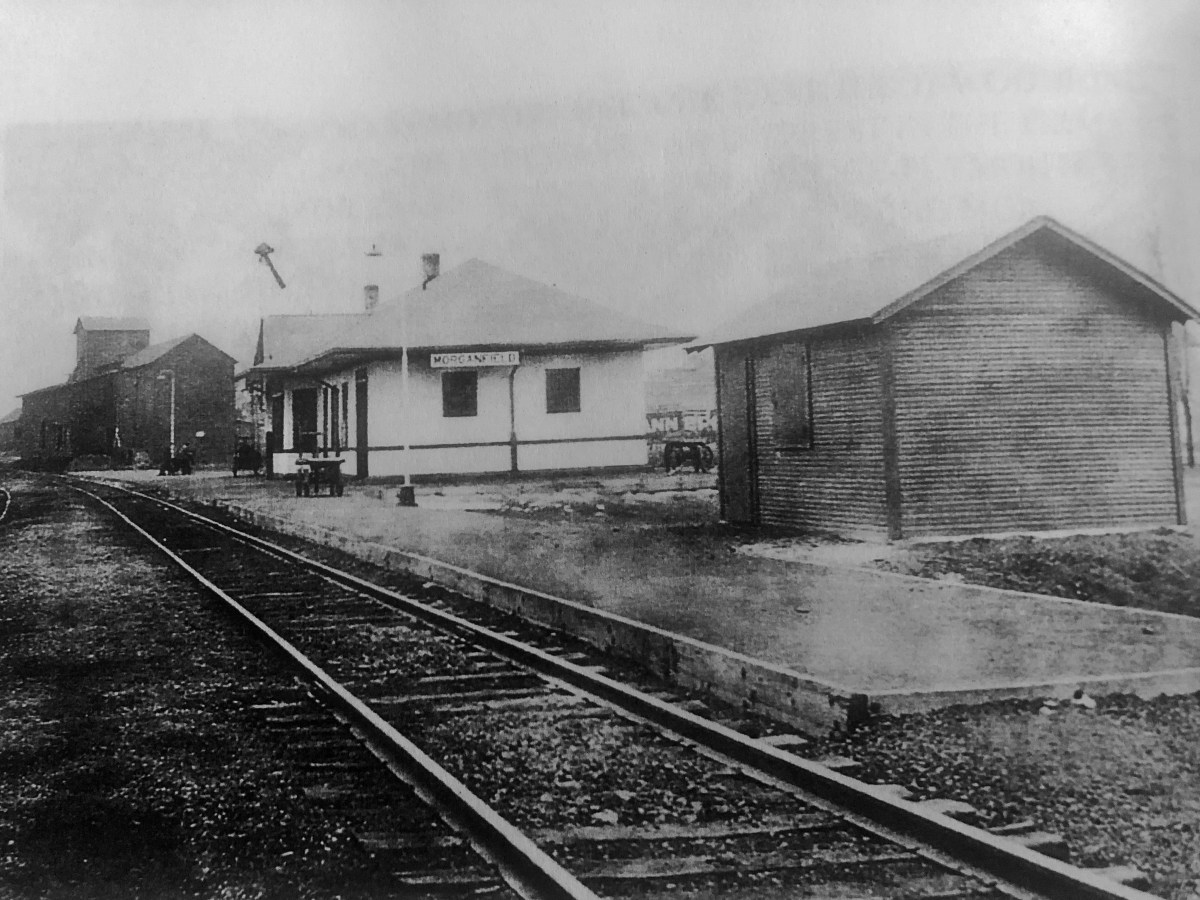
There’s an old train station across the street. Deserted and gray like the crumbling concrete steps. You stand on the rust-covered tracks and look east down where they cut open the pigs, their blood sopped by sawdust. To the west is colored town and then nothing else.
You think of Little Rock. And Jacksonville. And Rocky Mount.
The trains don’t run
where dreams bleed and gutted,
the long walk back home
Editor’s Note: This piece of Haibun poetry was prompted by a recent Pen to Paper Live session hosted by the Charlotte Lit organization. Charlotte Lit hosts the free sessions weekly. You can register here.
The session was led by Kathie Collins, who said Haibun is a Japanese form popularized by the renowned poet Bashō in the 17th century. “Think of it as a mini-lyric travel essay finished off with an insightful postscript in the form of a haiku.”
 Michael Banks 360