

Sports design work
Shown is an example of design work I did while employed as Deputy Editor of The Gaston Gazette newspaper in Gastonia, NC.
Shown is an example of design work I did while employed as Deputy Editor of The Gaston Gazette newspaper in Gastonia, NC.
Many of the characters and locations that turn up in the timeless works of playwright Tennessee Williams — including scenes from “A Streetcar Named Desire” and “Orpheus Descending” — originated from a small town on the flat open land known as the Mississippi Delta and an oxbow body of water named Moon Lake.
By Michael Banks
So many of the characters and scenes that have been shared on a world stage through the words of Tennessee Williams can be traced back to the time the famous playwright called Clarksdale, Miss., and Coahoma County his home.
An assortment of Blanches and Stellas have whispered the words Moon Lake while audiences sit transfixed, deep within their own visions of characters and scenes drawn from Williams’ Deep South and life in the Mississippi Delta.
And it is still now, some 35 years after Williams’ death at the age of 71, in which this area is still celebrating and creating new ways to showcase its small part in all that was Tennessee Williams.
For Clarksdale and Coahoma County is very much a part of what Tennessee Williams was and Tennessee Williams is very much a part of what Clarksdale and Coahoma County is and can become.
‘Home is where you hang your childhood’
It is believed that Edwina Dakin Williams and her two children moved in with her parents in a church rectory on DeSoto Avenue in Clarksdale sometime during the late spring or early summer of 1917.
Tom, as Tennessee was known then, would have been six years old at the time when he and his mother and older sister, Rose, moved in with his grandparents, the Rev. Walter E. and Rosina Otte Dankin, who lived in Clarksdale from 1917-’32 while the Rev. Dakin was the rector of St. George’s Episcopal Church.
Tom and his mother and sister would live in Clarksdale for about 16 months with Tom attending Eliza Clark School until the trio moved to St. Louis in 1918 to join his father, Cornelius Coffin Williams, who had been a traveling salesman for most of Tom’s early life before he finally landed a desk job.
Still, Tom and his sister would make frequent trips to Clarksdale to visit their grandparents, who by this time had moved into the new rectory located on Sharkey Avenue beside St. George’s Episcopal Church.
And Tom and Rose would live with the Dakins in Clarksdale at different times due to their mother’s poor health following the birth of their brother, Dakin. Tom lived in the Sharkey rectory for 16 months in 1920-21 and completed fourth grade at Oakhurst Elementary School.
He would then visit the Dakins most summers until graduating high school in 1929.
Panny Mayfield, a Clarksdale journalist who has done a number of stories on Williams through the years, believes the days and nights Williams spent in Clarksdale and Coahoma County was “an idyllic, quiet time.”
“I think he was very happy here. It was the happiest time of his life.”
— Panny Mayfield, Clarksdale (Miss.) journalist
“I think he was very happy here. It was the happiest time of his life,” she said.
Acting coach and documentary filmmaker Karen Kohlhaas agrees, pointing to a popular quote attributed to Williams: “Home is where you hang your childhood.”
Gold buckle of the cotton belt
She says the Clarksdale of Williams’ time in the 1920s is very much different than it is now. At the time, Clarksdale was called “Little New York,” Kohlhaas said, as there were as many millionaires per capita here as there were in New York City.
“It was known as the gold buckle of the cotton belt. It was one of the richest small towns in America because of the cotton boom,” she said of the planters who were getting up to $1 per pound of cotton at the time.
But those heady days wouldn’t last as the cotton futures market crashed and the price of a pound of cotton sunk to a nickel as many lost fortunes.
“People lost everything,” Kohlhaas said. “But still, they continued on. It was the gambler mentality. That whole rise and fall with how good of a crop you were going to get.”
And it would be these people, that mentality, that would serve as characters in many of Williams’ future plays.
“These are the people he is writing about,” said Kohlhaas, who makes her home in New York City and has been working on her documentary of Williams for the past eight years.
“Up here in the North, people tend to paint the South with one brush. But the Delta is so incredibly different from the Old South, like Virginia. It was sort of like the Wild West as opposed to Gone With the Wind.
“I did not understand it at all until I started working on this project. As I learned a lot more about the Delta and Delta personalities, I began to see and understand how that is embedded in his plays.”
The people who gave his stories life
Kohlhaas believes the story of Williams is not so much the tale of “this little boy remembering his time here” but rather “it was a constant association with the place through his grandfather.”
She also believes Williams was “deeply sensitive” and pulled from his experience of “being both inside and outside the society of Clarksdale.”
Being the grandson of the town’s beloved Episcopalian priest gave the family social status, but Kohlhaas says “at the same time, he did not fit in with a lot of the kids in town.”
This could help explain Williams’ fondness for “compassion and understanding for people on the edges of society,” Kohlhaas said.
“He would spend his time writing and alone. He wasn’t the typical Delta boy who wanted to go out and fish and hunt. He and his sister both had big imaginations and were very creative.”
Mayfield said she has heard the tale that the character Brick Pollitt from Williams’ play Cat On a Hot Tin Roof was based on a boy who lived right down the street from the rectory and had apparently beaten up Tom on one occasion.
She said that a family member of Brick’s relayed to her on a later occasion that “they thought that Tennessee Williams got even” with his portrayal as Brick as an alcoholic, aging former high school football star who is in a strained marriage.
Williams drew on memories from his Clarksdale childhood as material in his plays. Names such as Blanche, Stella, Brick, Laura, Wingfield, Cutrer and Baby Doll became namesakes for famous Williams characters. He also referenced local stores, towns and landmarks such as Moon Lake and the stone angel in Grange cemetery.

She said Williams didn’t like the time he spent in St. Louis.
“He loved the people, the wit, the humor, the style of people like the Cutrers,” Kohlhaas said.
“He hated it and didn’t take to it at all,” Kohlhaas said. “He wanted to come back to Clarksdale.”
Williams would continue to have a strong relationship with his grandparents through their remaining years. His grandmother would send him money until he finally achieved commercial success with “The Glass Menagerie.”
“She truly believed in him,” Mayfield said.
His grandfather, who lived to be 95, would visit Williams after he became famous and his grandson would always ask about the residents of Clarksdale as Mayfield said he kept up with the Cutrers and the Clarks and their stories.
Kohlhaas said the last documented visit by Williams to the Mississippi Delta, that she can find, is his trip to Beloit in December 1955 when he visited for the filming of “Baby Doll.”
A ‘research center’ for actors
With its history and the preservation of several landmarks mentioned in Williams’ plays, this area has attracted both professional actors and common tourists seeking the Tennessee Williams experience.
Mayfield says Clarksdale has become a sort of “research center” for actors and actresses portraying characters from Williams’ many works. She has served as host for many, including Ruth Wilson who portrayed Stella from A Streetcar Named Desire during a London run and also the famous English actress Lia Williams, who was recognized for her role as Blanche du Bois in a production of Streetcar in Dublin, Ireland.
Recently, accomplished actors Robert Cuccioli and Laila Robins visited the county as part of a fundraiser to assist in the opening of the Tennessee Williams Rectory Museum. In addition to many film and TV roles, Robins has portrayed the character of Blanche from “Streetcar” on many occasions and one of her first leading roles was in the role of Alma Winemiller in the Williams play “Summer and Smoke.”
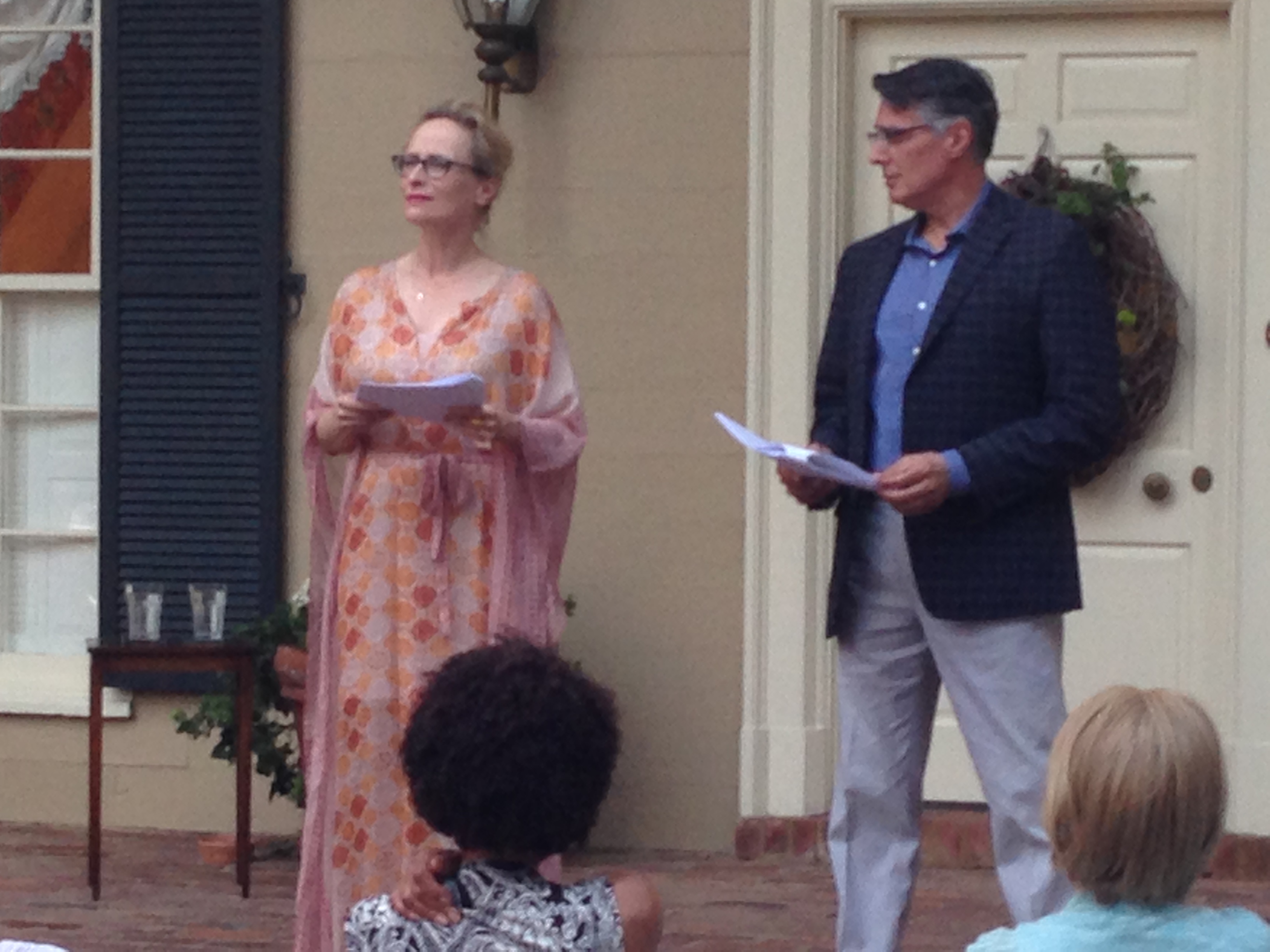
“In my imagination, I had often wondered who Alma was and who she is. All actors want to do research and see what inspired the character they are portraying,” Robins said. “What he writes of is in all of our DNAs. It captures us as human beings.”
Kohlhaas was able to take the Cuccioli and Robins to many of the notable areas in the county mentioned in Williams’ work. One moment that sticks with her was watching Robins as she visited Uncle Henry’s, the site of one of Williams’ most riveting scenes from “A Streetcar Named Desire.”
“She stood there, exactly where the Moon Lake Casino was, and looked out toward Moon Lake, walking the steps that Blanche would have taken. She, literally, began to cry as it was that moving to her,” Kohlhaas said.
Clarksdale is Shakespeare’s house
There is something special about coming to this area, Kohlhaas said.
“Clarksdale is a huge American theatre history location. It’s like Shakespeare’s house. I just hope to bring more and more awareness to it.”
One thing she is doing is serving as curator for the soon-to-open Tennessee Williams Rectory Museum at 106 Sharkey Ave. in Clarksdale. Plans are for the museum to open Oct. 12 during the Mississippi Delta Tennessee Williams Festival.
The museum will document Williams’ childhood in Clarksdale and his family history, as well as the local people, places and history that Williams featured most in his famous plays. Kohlhaas said it’s “been like decorating a giant doll house.”
The mission of the museum is to educate visitors about Clarksdale and the Mississippi Delta history as they appear in Williams’ work.
Not far from the rectory is a Tennessee Williams Park that was dedicated in October 1994. Other popular spots to visit are the former Moon Lake Casino and the Cutrer Mansion, which dates back to 1916.
Jen Waller, who is director of the Coahoma County Higher Education Center/Cutrer Mansion, said they see a steady stream of people wanting to see the home of the family mentioned so often in Williams’ works.
Clarksdale’s founding father, John Clark, had nine sons and one daughter and her name was Blanche Clark Cutrer. She married John W. Cutrer in a ceremony that was presided over by the Rev. Dakin and was considered to be one of the most lavish events of its time.
“We don’t have as much traffic as I wish we did, but I do love it when tourists stop by and I get to tell them about the Cutrers. It’s almost always because they’ve seen the house connected to Tennessee Williams,” she said. “We do have a small tourist traffic, but not tons. Maybe it will increase with the rectory museum.”
The main event tied to Williams here is the Mississippi Delta Tennessee Williams Festival, which is now in its 26th year. This year’s festival will run from Thursday, Oct. 11 through Saturday, Oct. 13.
There will be a kickoff dinner and dancing, historic tours and a panel on the Cutrer family and Clarksdale history. Saturday’s events include a monologue and scene competition for students from all over the state, followed by an afternoon of plays performed on porches on homes located in the city’s historic district.
One of the leading organizers of the event is Mayfield, who was involved with the first festival in 1992.
“She’s really been legendary over the years,” Waller said of Mayfield. “She’s been carrying this torch for Tennessee Williams and the blues even before anyone else was really doing it.”
Appreciation only grows
Mayfield said Williams’ stories persevere as he was “very courageous” in his writing.
“They still have meaning… he wrote of difficulties in relationships,” Mayfield said.
Kohllaas, who originally wanted to finish her documentary two years ago, said it’s been “quite a process” of putting together the film with the working title “Tennessee Williams and the Mississippi Delta.”
She said, “There’s just so much material and I want to make sure it’s correct. It’s been like making a giant quilt.”
Still, Kohlaas has learned much about Williams during the process and it has only enhanced her appreciation of his talents.
“He is the Shakespeare and the Chekhov of America. He used lyricism and poetry in his writing like Shakespeare, but like Checkhov, he wrote of a decaying society and an aristocracy that was steadily descending.”
She adds that those hundreds of hours spent in the Carnegie Public Library researching Williams and the countless visits she’s made here have also revealed “just how much the Delta actually influenced him, especially early in his career, which are considered some of his greatest pieces of work.”
Waller has spent most of her life in Coahoma County and admits it wasn’t until 1996 when she first became aware of Williams’ association with Clarksdale. As part of the Williams Festival that year, there was a production of “Cat on a Hot Tin Roof” at the former Larry Thompson Center at the old movie theatre on Yazoo Avenue.
“It was excellent. I remember going to that and thought it was amazing,” said Waller, who admits her favorite Williams play is “The Glass Menagerie.”
But the worldwide impact hit her even more when she and Clarksdale resident Eva Connell visited New Orleans for that town’s Williams Festival two years ago.
“We were at this one place and they did a reading of a one-act play. I’d never heard of it before, but it was all about Friars Point and Moon Lake. This was in New Orleans in front of people from all over the world. That was eye-opening. The ones that really didn’t get much play, he used these same landmarks in these shorter plays.”
Waller said, “It’s become such a valuable piece of our history and it’s really become known worldwide.”
These words written by Williams are now being spoken in many dialects. There’s Baby Doll in German. Blanche in a thick Irish brogue. Or Stella on a South African stage.
Williams and his wonderful scenes and these stories of the people and places of Clarksdale and Coahoma County continue on.
As Kohlhaas says, “This little boy who lived in Clarksdale ended up reaching the entire world.”

 Michael Banks 360