From Kentucky to North Carolina: A Personal Reflection

When I’m asked “Where you from?”, these are the people and places that come to mind.

Read More

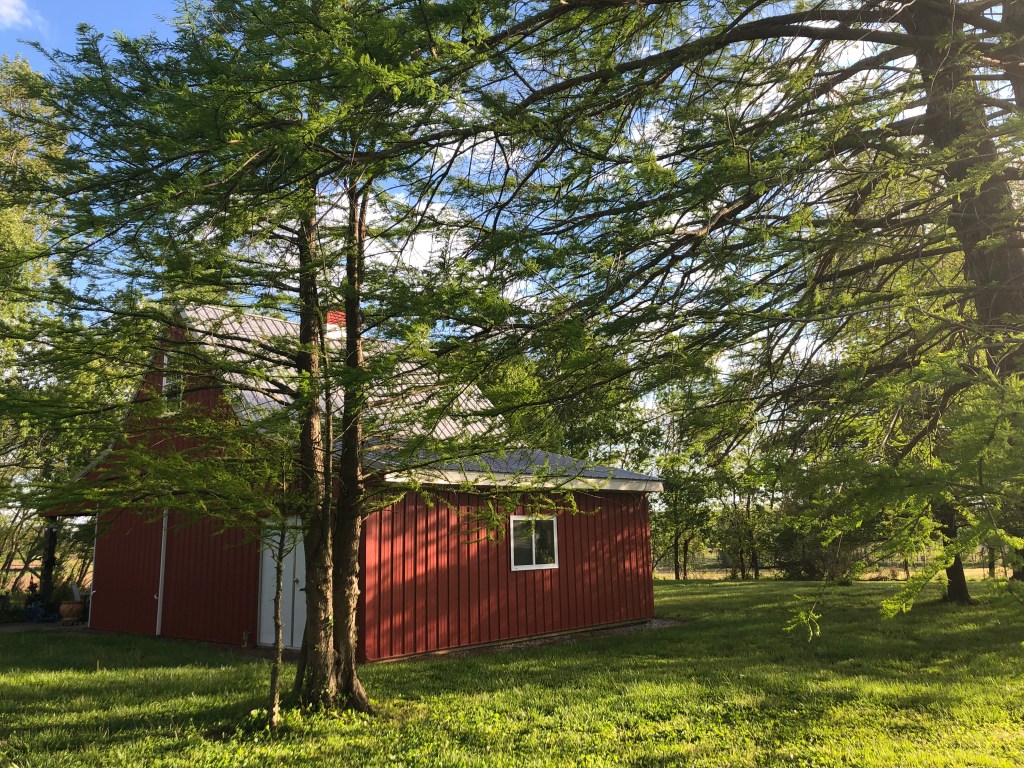
In the loft of this Amish-built barn, not far off Grove Center Road, is where I’ve done some serious writing, including the first third of a novel tentatively titled “Bend In the River.” (Photo by Michael Banks)

For the past 25 years, Iโ€™ve lived in North Carolina โ€“ minus a 15-month sojourn to the Mississippi Delta, where I believe I rediscovered the writer living within me.

Prior to my move to Gaston County (NC) that last week of September 1999, Iโ€™d lived my entire life — now counting 58 years — in Kentucky. Western Kentucky to be exact.

Thereโ€™s a town within Union County, not far from the Ohio River, and surrounded by coal fields and corn and soybeans, where I grew up and spent a good portion of my early career in newspapers.

Morganfield is my hometown and my maternal grandparents lived across the road and my uncles and cousins are sewn along Highway 130, which we called Grove Center Road for most of my childhood.

I attended college at Western Kentucky University in Bowling Green and spent nearly two years working at a newspaper in Murray, Ky., and another in Calhoun, Ky.

I know that part of Kentucky โ€“ its topography (rolling hills interspersed with fields of grain) and its people. Oh, the people.

Iโ€™ve done a bit of looking into the Banks and Robinson family trees and discovered, for the most part, my people came to Kentucky in the late 1700s and early 1800s from Virginia and North Carolina. Maybe that notched wedge of land — not far from where the Wabash River dumps into the Ohio — was their very own land of milk and honey as not many of my relatives have left.

I’ve discovered those woods and creek beds and thickets of my youth often find their way into the stories of that I write today. The ballfields, taverns and courthouses of my later years also linger and serve as background in those same stories.

Itโ€™s the same with the people that Iโ€™ve interacted with during my time on earth. There are bits and pieces of many of them mashed together to create delightful and, often, confounding characters who fill my scenes. Their dialogue and the tales they spin are the ones Iโ€™ve heard from the lips of others or imagined so.

Iโ€™m every bit Kentuckian.

Outside my window, the redbuds are in their early stages, heavy with purple. Mockingbirds, searching for a mate, squawk and defend their turf. The days are longer and I stay seated when the morning sun slants through the window and its warmth lands on my shoulders.

I think of the first Saturday in May and the crash of the starting gate and hooves hitting the dirt as they near the first turn at Churchill. 

โ€œHave you got your Derby horse,โ€ theyโ€™ll ask.

โ€œSoon. Very soon,โ€ I reply.

When the 20 horses and their riders take the track, the band plays โ€œMy Old Kentucky Homeโ€ and New Yorkers and Californians and Texans in their pastels and linen will tear up and raise their frosted glasses and toast that โ€œold Kentucky home, far, far away.โ€

But for us, who truly know Kentucky, itโ€™s a lot more personal.

Itโ€™s spring and pulling up old barn wood and digging up fat earth worms and flinging them into country ponds lined with green moss and waiting for the smallmouth to strike.

Itโ€™s walking the first rows of a corn field in late July, enduring the slice of a sharp leaf, to find the sweet corn and how it will taste when its boiled and the butter and salt will stick to your lips.

Itโ€™s the sounds of old hymns sung by others before us and incantations of the traveling preacher man filling the pews at Bethel Baptist, the harmonies and spirit pouring from the open window and weaving among the headstones covered in autumnโ€™s rust. 

Itโ€™s winter and it’s dark and the hawk — that brutal wind — roars from the north and we gather by fires and sip bourbon and tell stories from days warmer and know that more await.ย 


Editor’s Note: Work continues on my novel, tentatively titled “Bend In the River,” that includes many of the places and characters compiled from my days and nights spent in Kentucky.
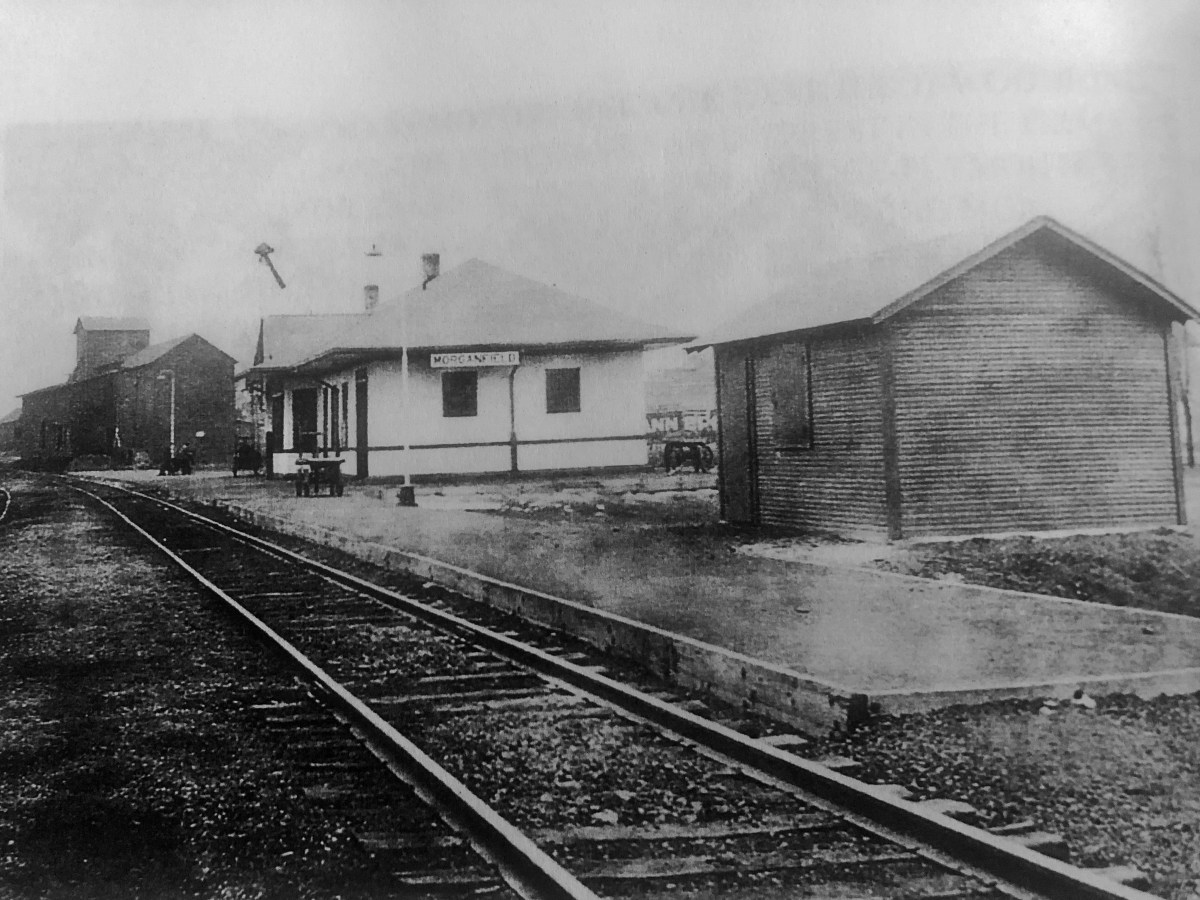
Waiting at the Depot

The waiting game at The Depot Tavern would often set a mind to wandering about the future.

Puddles form at the base of the bottle of Coca-Cola. If you tilt the glass, the brown sugar water runs and you see etched on the bottom far-off places like Little Rock, Arkansas; Jacksonville, Florida; or Rocky Mount, North Carolina. In your hand, the Coca-Cola warms, and more sweat runs, staining the worn tabletop.

At the Depot Tavern, bottles of PBR rest on beer guts that strain the buttons, gripped by the grease-stained, gnarled-knuckled fists of the mechanics at the Chevy dealership. The beer never warms as they order a round and another and another, chasing that buzz between the 5 oโ€™clock punchout and the 7 oโ€™clock chicken pot pies with the old lady and rug rats. 

He asks if you want another Coca-Cola. You lift the bottle, but the drink is warm like spit and you donโ€™t swallow.

Why donโ€™t you go outside, he says. I wonโ€™t be much longer.

Thereโ€™s an old train station across the street. Deserted and gray like the crumbling concrete steps. You stand on the rust-covered tracks and look east down where they cut open the pigs, their blood sopped by sawdust. To the west is colored town and then nothing else.

You think of Little Rock. And Jacksonville. And Rocky Mount.

The trains donโ€™t run

where dreams bleed and gutted,

the long walk back home


Editor’s Note: This piece of Haibun poetry was prompted by a recent Pen to Paper Live session hosted by the Charlotte Lit organization. Charlotte Lit hosts the free sessions weekly. You can register here.

The session was led by Kathie Collins, who said Haibun is a Japanese form popularized by the renowned poet Bashล in the 17th century. “Think of it as a mini-lyric travel essay finished off with an insightful postscript in the form of a haiku.”

History’s music man

Zach Lemhouse is not only a talented musician, but he’s also a teacher of history, who’s bringing alive stories of SC’s past through music.

Lemhouse uses his violin to help tell South Carolina’s past

Zach Lemhouse often plays his violin for visitors to Historic Brattonsville, an 800-acre living history site in McConnells, S.C. Photo by Nathan Bingle.

When Zach Lemhouse weaves his bow across the taut strings of his violin, itโ€™s more than just the notes of a by-gone era that fills the space. Within the rhythm is the music, history and a love of learning thatโ€™s formed the composition of his life.

When Lemhouse plays for visitors at Historic Brattonsville, an 800-acre living history site in McConnells, S.C., heโ€™s hoping his passion for history and music translates in the songs you would have heard in the Carolina Piedmont in the 18th and 19th centuries.

โ€œItโ€™s hard to know where youโ€™re going if you donโ€™t know where youโ€™ve been,โ€ says Lemhouse, who is the staff historian for four museums in York County (S.C.).

The son of two teachers in the Clover (S.C.) public school district, family vacations were always at historic sites across the state. That fostered the interest in our past and he would follow in his fatherโ€™s footsteps, teaching history to middle school students for five years soon after his graduation from Winthrop University. 

Musically, the 31-year-old Lemhouse started taking violin lessons when he was 7 after seeing a fiddle player in an โ€œold-time bandโ€ perform traditional gospel tunes at a Sunday camp meeting at his church. 

โ€œI saw it and fell in love with it,โ€says Lemhouse, who learned by playing classical and, about 20 years ago, he included old-time tradition, as well as Scottish and Irish folk songs that heโ€™ll play at Brattonsville alongside his mentor, Nash Lyle. He embraces the traditional music and teaches those skills at the Jink and Diddle School of Scottish Fiddle held each year in the North Carolina mountains.

โ€œIโ€™m an educator,โ€ he says. โ€œI may not be in the classroom any more, but Iโ€™m a teacher. To effectively transfer knowledge from one person to another. Thatโ€™s what I did in the classroom and, absolutely, thatโ€™s what Iโ€™m doing at Brattonsville.โ€


Getting to know Zach Lemhouse

AGE: 31. He was born June 26, 1990.

CLAIM TO FAME: Heโ€™s the staff historian for the Culture and Heritage Museums of York County (S.C.) and director of the Southern Revolutionary War Institute, a research library dedicated to the study of the oft-forgotten Southern campaigns of the American Revolution.

HOMETOWN: York, S.C.

IS IT A FIDDLE OR VIOLIN?: The funny answer? โ€œA violin has strings; a fiddle has strangs,โ€ Lemhouse says. โ€œOr a fiddle has a red neck.โ€ Seriously? โ€œThereโ€™s no difference.โ€

WHATโ€™S ON HIS BOOKSHELF?: Stuck between the studies on the American Revolution, theories of educational thinkers and scores of sheet music, youโ€™ll find several comic books. โ€œIโ€™m more of a DC fan than a Marvel fan. Especially Batman.โ€

Where to hear his music:

In addition to his work at Historic Brattonsville, Lemhouse is also a member of three Bluegrass bands โ€“ the legendary WBT Briarhoppers, established in 1934 and inducted into the North Carolina Music Hall of Fame in 2020, the Whippoorwill String Band and the Cottonwood Bluegrass Band — where his set list expands to include favorites like the โ€œOrange Blossom Specialโ€ and โ€œRagtime Annie.โ€

Zach Lemhouse plays “Ashokan Farewell” on a custom Lehmhaus cigar box fiddle.

As staff historian for the Culture & Heritage Museums, Lemhouse’s interviews with top bluegrass and Americana bands will be featured in this year’s Southern Sound Radio concerts, live performances recorded at the McCelvey Center in York and broadcast every Saturday in November from 8 to 10 p.m. on all S.C. Public Radio stations.

The 2022 lineup includes performances by Della Mae (Nov. 5), Chatham County Line (Nov. 12), Ruthie Foster (Nov. 19) and Steep Canyon Rangers (Nov. 26). In the interviews, band members reflect on the evolving nature of traditional music and discuss historical crossovers of genres that encompass the roots music of the Carolina Piedmont. 

Find your South Carolina Public Radio station and livestream details at southcarolinapublicradio.org. The full interviews are also available on the Culture & Heritage Museum’s YouTube page


Editorโ€™s Note: version of this SC Stories profile was featured in the November/December 2022 issue of South Carolina Living, a magazine that is distributed 11 times a year to more than 1 million South Carolinians by The Electric Cooperatives of South Carolina.

South Carolina’s model for fans of model trains

The Model Trains Station in South Carolina’s Upstate is regarded as one of the best in the Southeast. What makes it so?

Author’s Note: An edited version of this story appeared in the November/December 2021 issue of South Carolina Living magazine.

If one was to kneel down at just the correct height and vantage point, you could soon forget you were standing in an old cotton mill in South Carolina’s Upstate. Instead, youโ€™d hear, then see, the steam locomotive as it emerged from the mountain tunnel, its metal wheels chugging along the tracks, the engineโ€™s massive smokebox looming larger and larger as it hurtled toward you.

The trains at the Model Trains Station in Taylors, S.C. (Video by Michael Banks)

That act of space and time travel is one of the main attractions of whatโ€™s billed as the best multi-scale interactive train display in the Southeast. With the simple push of a button, electric current, creativity and centuryโ€™s old toymaking, visitors to the Model Trains Station in Taylors, S.C., are transported to a simpler time.ย 

Scott Doelling, of Greenville, S.C., who is a customer of Laurens Electric Cooperative, first started playing with trains as a 7-year-old. One of his old trains is featured in a layout at the station and he volunteers two to three days a week.

It’s a hobby that you never really outgrow.

Scott Doelling, volunteer at Model Trains Station
Volunteers are shown working on one of the displays at the Model Trains Station in Taylors, S.C., in this May 2021 photo. (Photo by Michael Banks)

โ€œItโ€™s a hobby that you never really outgrow,โ€ said Doelling, who spent 31 years in the corrugated paper business and specializes in creating scenery, such as the mountains and forests lining the tracks. โ€œYour imagination can go wild. You can do anything.โ€

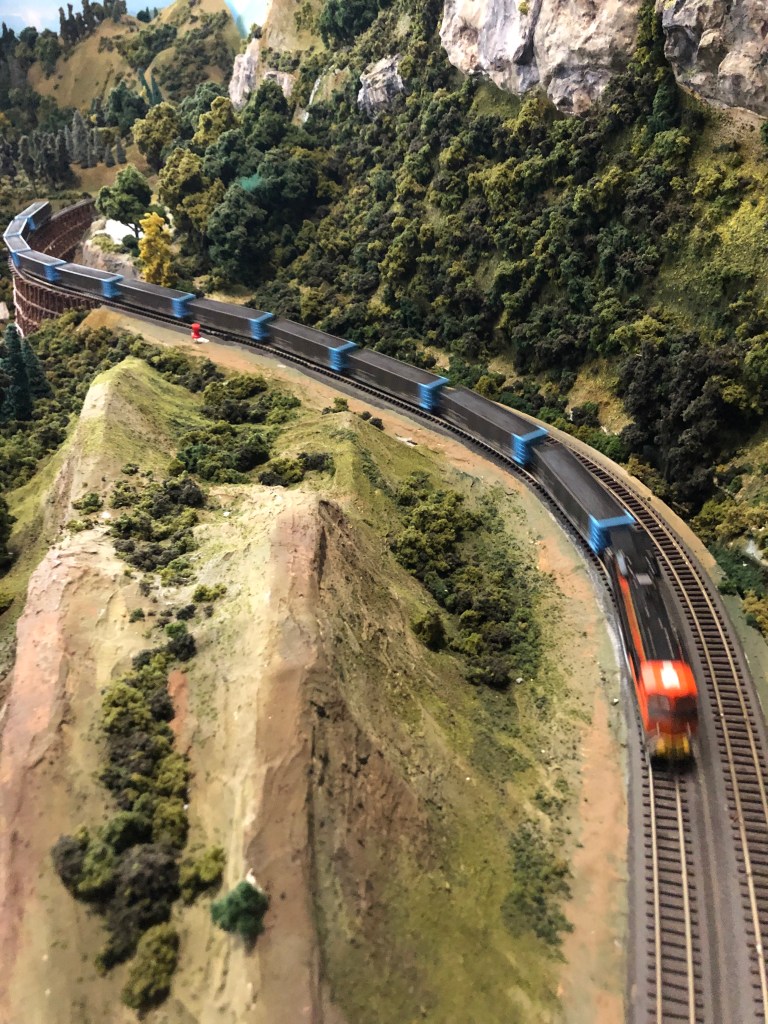
There are hidden gems among the many layouts and visitors are encouraged to take part in a scavenger hunt. Look closely and youโ€™ll see a group of Boy Scouts around a campfire. Look closer and youโ€™ll see a bear attack right around the bend.

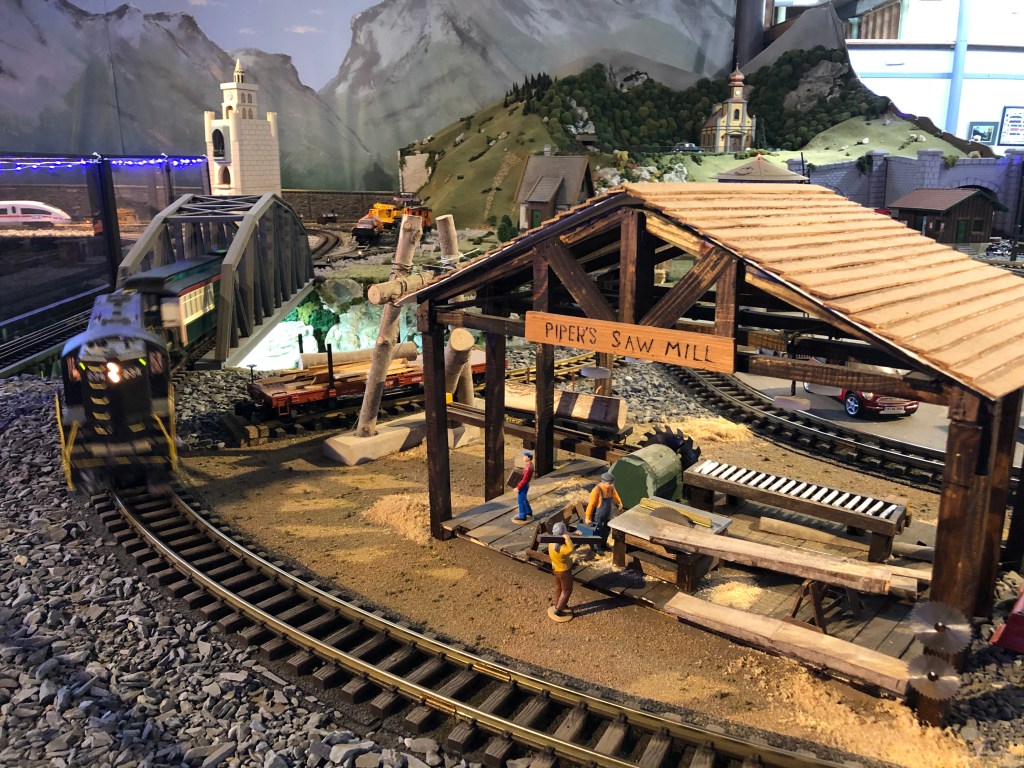
There are push buttons that control different parts of a layout. Children can not only control some of the trains that run on the tracks, but also give power to a saw mill or take delight when a conductor steps out from his station.

Model trains are constantly running at the Model Trains Station in Taylors, S.C. (Video by Michael Banks)

โ€œWe try to put us much interaction for the kids as we can,โ€ said Doelling, who is one of about 20 volunteers.

There are plenty of vintage trains, including some from the 1920s, that still run along the tracks. But there are plenty of advancements, including digital programs that now allow you to control the train from your mobile phone. There is a train repair shop where people can bring in a faulty engine and the group also allows visitors to bring a train from home and run on the tracks.

Bob Rayle is chairman of the board of directors for the Model Trains Station in Taylors, S.C. (Photo by Michael Banks)

The trains and the nine massive displays spread out over 16,000 square feet of space at the historic Taylors Mill mean different things to different people, said Bob Rayle, chairman of the stationโ€™s board of directors. Rayle, who still owns the first train set he got when he was 6 years old, said the station is more than just about model trains.

It’s the little things and the detail. They make the picture, they tell the story.

Bob Rayle, chairman of board of directors for Model Trains Station
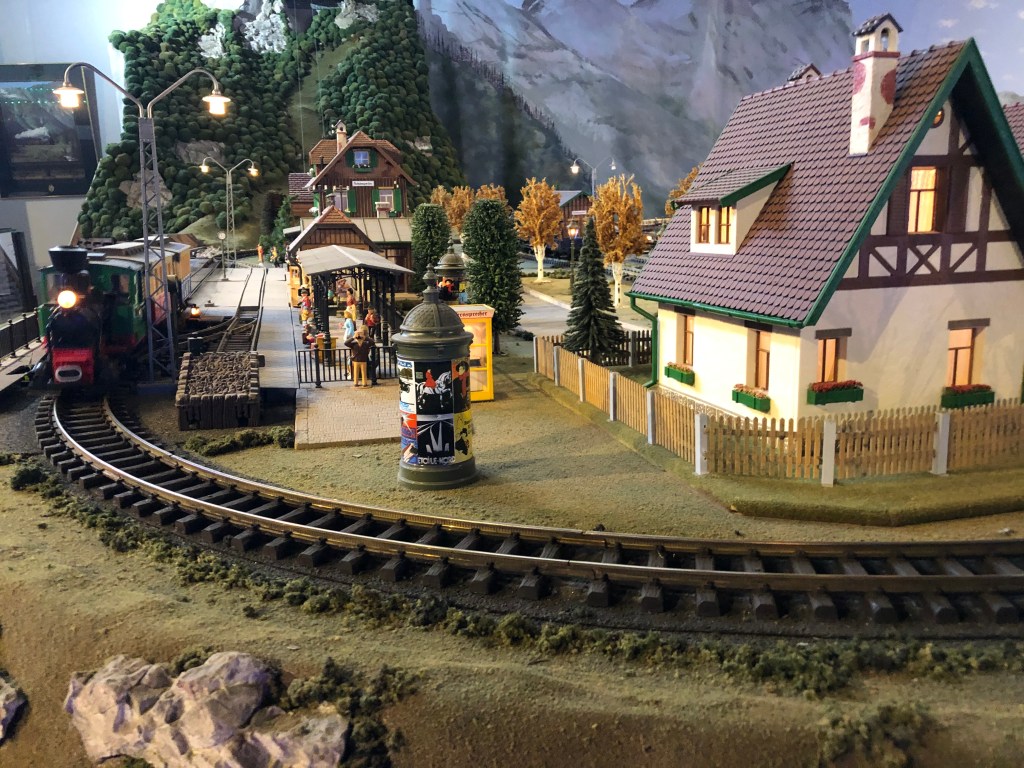
Some of the displays at the Model Trains Station in Taylors, S.C. (Photos by Michael Banks)

โ€œItโ€™s the little things and the detail. They make the picture, they tell the story.โ€

Rayle points to the wooden bench where Erna Liebrandt likes to come and sit and watch the trains run on a 600-square-foot display modeled after the town of Schonweiler in southern Germany near the Austrian border. Erna and her husband, Gunnar, were born in Germany and she donated her husbandโ€™s prized display after his death. The volunteers at the station helped to build and triple its size, adding a church, mountain backdrop and tunnel for the trains to pass through.

โ€œShe just sits there and looks at that German city,โ€ Rayle said, โ€œand what she seesโ€ฆ is her husband. And sheโ€™ll sit there and cry.โ€

Nearly all of the items at the station, which opened in December 2017, have been donated, Rayle said. He tells of another lady who brings her grandchildren at Christmas and they watch Grandpaโ€™s trains run. For years, the tracks heโ€™d built had sat silent under blankets in his double-car garage. Now, they bring enjoyment to others.

Bob Rayle assists a visitor at the Model Trains Station in Taylors, S.C., during a May 2021 visit. (Photo by Michael Banks)

Brittany Kujawa, of Simpsonville, S.C., spent a summer day visiting with her three children, ages 7, 5 and 2, as part of a home school group. She said they were shocked when they walked in and saw so many trains and so many sets.

โ€œMy kids love trains,โ€ Kujawa said. โ€œThe staff here is so involved with the kids and I like the freedom they let them have. I was nervous coming here, โ€˜Model trains, you canโ€™t touch them.โ€™ But theyโ€™ve done such a great job of making them available for the kids to interact with, as well as giving them a place they can run off energy. One of the staff said, โ€˜They can go wild here.โ€™ And thatโ€™s really appealing to a home school mom. Thereโ€™s something for everyone.โ€


One of the displays that fill the Model Trains Station in Taylors, S.C. (Photo by Michael Banks)

Get There

The Model Trains Station is located at Taylors Mill, 250 Mill St., Suite BL 1250, in Taylors, S.C.

Hours: Wednesday-Saturday: 11 a.m. to 5 p.m.; Sunday: 1 to 5 p.m.

Admission: Adults: $8; seniors and military: $7; children (age 2 to 12): $5; children under 2: free. Special rates available for groups and birthday parties are welcomed.

Details: They are always looking for donations and volunteers. For more information, visitย www.modeltrainsstation.comย , emailย modeltrainsstation@gmail.comย or call (864) 605-7979.

Visitors are shown at the front entrance to Model Trains Station in Taylors, S.C. (Photo by Michael Banks)