A tiny love story from a night when the rain fell in Charlotte, NC, on a late June night in 2014.
At the Fillmore, musicians emerge from thick curtains and fingers pluck at strings and eyes turn upward and ears fill with rhythms and rhymes. Shafts of red and blue sneak from hidden banks, falling upon sweaty faces whispering of desires and regrets. I’d come for Ziggy Stardust and instead found her. She danced in a pool of emerald. A pert nose, dark eyes emerging from a mass of chocolate curls. We discovered “Modern Love” and she laughed and my heart leaped. I emerged, her number in my pocket and I sang of “Starman” and life was good again.
David Bowie’s “StarMan”
NOTE: The above work came from a writing prompt presented during a recent Pen to Paper Live session hosted by the Charlotte Lit organization. You can register here. In the session, presenter Paul Reali challenged us to write our very own tiny love story of less than 100 words. “They try to capture in a very small space something that is very important,” he said.
Like what you see? Please share this via the following methods:
Read of one woman’s push to chart a path for those wishing to discover their heritage in South Carolina.
Dawn Dawson-House, executive director of the WeGOJA Foundation, is shown at the African-American Monument on the S.C. State House grounds in Columbia, S.C. Photo by Milton Morris.
As a child, Dawn Dawson-House learned plenty about this country’s founding fathers. Missing were the exploits of South Carolina civil rights leader the Rev. Joseph Delaine and Robert Smalls, a former slave who represented the Palmetto State for five terms in Congress.
Those lessons were learned at the family dinner table as well as at church and other social gatherings around her hometown along the coast.
“The community of Beaufort won’t let you forget that African-American history is important,” Dawson-House said. “Our teachers, our families, our festivals and events, you were surrounded by African-American heritage. I found it interesting because it spoke to us.”
Since January 2021, Dawson-House has been the executive director of the WeGOJA Foundation. Pronounced we-GO-juh, the name is a fusion of three languages spoken by people of African descent who were brought to America as slaves.
WeGOJA works to document and promote African-American heritage sites in South Carolina. That work is done through historical markers, listings on the National Register of Historic Places and the Green Book of South Carolina. Teacher guides are provided for classrooms and there are plans to provide toolkits for the large number of African-American families who gather here each year for reunions.
Dawson-House, who spent nearly 25 years in public relations for the SC Department of Parks, Recreation and Tourism, believes there’s no time like the present to embrace the stories of our past.
“The more we can share the story, the more we can build interest into advocacy, into action, we can start creating our authentic story better,” she said. “It’s not just for tourism, but for the public’s full understanding of our history and our full story so it’s easier to make wiser choices when we talk about public decisions.”
Getting to know Dawn Dawson-House
Claim to fame: She recently accepted the job of executive director at the WeGOJA Foundation after a long career in communications with South Carolina Parks, Recreation and Tourism.
Alma mater: Graduated from the University of South Carolina in 1985 with a degree in journalism. “I thought I was going to be the next Oprah Winfrey, but got out into the real world and realized I couldn’t pay rent.”
Favorite state park:Landsford Canal State Park in Catawba with its “gentle tumble” whitewater and colorful rocky shoals spider lilies. “It’s a beautiful sight.”
Time to unwind: When she’s not enjoying Mexican food, you can often find Dawson-House on her treadmill. She and her husband of 25 years, William House, an investigator with the S.C. Attorney General’s office, are planning a train trip through the Canadian wilderness.
Editor’s Note: A version of this SC Stories profile was featured in the July 2021 issue of South Carolina Living, a magazine that is distributed 11 times a year to more than 1 million South Carolinians by The Electric Cooperatives of South Carolina.
Like what you see? Please share this via the following methods:
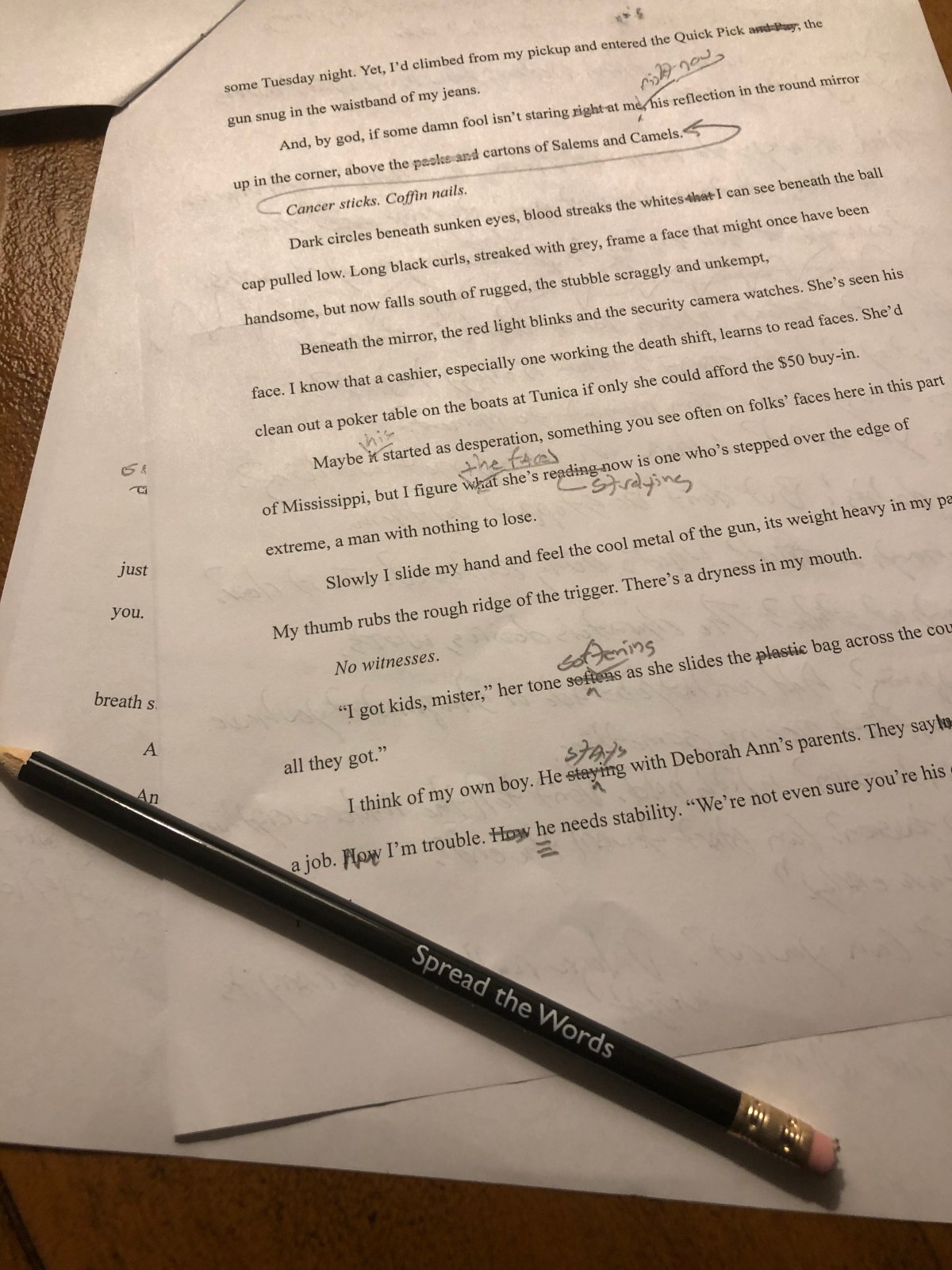
Best writing advice? Well, there is a Hemingway quote that hangs on my wall: “Write drunk. Edit sober.”
I was recently asked to be a featured member of the Charlotte Writers’ Club. The feature, dubbed Meet A Member, runs in each monthly newsletter and is a great way to learn more about the fellow club members.
I’ve been a member of the Charlotte Writers’ Club for nearly two years now and have found it to be a great resource as I venture into the world of fiction writing and freelance work.
One of my favorite benefits of being a club member are the monthly programs by published authors taking on such topics as “Maintaining Suspense in Your Writing” and “Getting to Know Your Character.” The club holds several writing contests throughout the year and rewards the top submissions.
There are also opportunities to present your work during Open Mic Nights, as well as a Virtual Writing Salon. There is the supportive community of fellow writers tackling many of the same issues, as well as chances to share feedback as part of several critique groups.
All in all, I’ve found a very worthwhile organization and one that I’m happy to be a member of.
What follows are my responses to the questions asked each month of the featured club member.
Meet a Member for July 2021
Michael Banks
Bio: A product of the western Kentucky coal and corn fields, I’ve spent most of my life documenting achievements and failings while working as a journalist at newspapers in Kentucky, Mississippi and North Carolina. I keep rowdy fans in check at Panthers games, write random features for magazines and enjoy the occasional sip of bourbon beneath my redbuds. All while pondering the first draft of my first novel.
When and Where Do I Write? I’ve found the Open Studio at Charlotte Lit to be a perfect place to get away and get my words down — morning, noon and night.
Favorite writing tool? I wish I could say I bang out my scenes via Hemingway’s Royal Quiet Deluxe typewriter. Instead, it’s the soft pitter-patter of my MacBook Pro that brings comfort.
A favorite writing resource? Notes taken from Charlotte Lit classes and CWC presentations are a great help, but I find that when I’m stuck I go in search of some of my favorite authors. Ron Rash and Jennifer Egan have helped get me back on track lately.
Best Writing advice you’ve received and actually taken? On my office wall hangs a supposed Hemingway quote: “Write drunk. Edit sober.” Claire Fullerton says, “For a writer, there is no there to get to, there is only the fulfilling, soul-driven act.” And that goes hand-in-hand with what I heard fellow CWC member Landis Wade say once: “Find joy in the process.” All good advice, I’d say.
One thing I would like help with? Now that the first draft is done, what’s next? How do we embrace revision? How do we query? The benefits of self-publishing? I’ve got quite the laundry list.
Membership in the Charlotte Writers Club entitles one to participate in workshops, critique groups, contests, and guest speaker programs. The cost is a modest $35 per year for individuals and $20 for students.
The organization welcomes all writers in all genres and forms to join our Charlotte-area literary community. A membership in the Charlotte Writers’ Club helps support writers, readers, and literacy at a critical time in our nation’s and our city’s history.
To join or renew a membership, click this Membership Link and follow the instructions.
Like what you see? Please share this via the following methods:
It was the summer of 1978 and I discovered RC Cola and baseball. My daddy? Well, he found Billy Beer.
In the summer of 1978, I discovered RC Cola and baseball.
I guess the soda that was a cheap knock-off of Coca-Cola had always been around, as was baseball, but that summer I consumed as much of both as humanly possible.
The reason? The collector cans that featured the RC logo and its slogan “Me and My RC” on one side and a photo of a Major League Baseball player on the other with his signature, stats and other pertinent information, such as was he right-handed or left-handed.
The collecting became an obsession and the stack of royal blue 12-ounce cans soon filled a wall of my bedroom. While I was always hopeful of an All-Star, such as Pete Rose or Reggie Jackson, it was multiple cans of little-known light-hitters like Freddie Patek and Bobby Grich that made up my shrine.
These ballplayers were the ones I heard Jack Buck talk about at night and on Sunday afternoons, his voice stretching from the St. Louis Arch out across the corn fields of Southern Illinois and the cliffs of the Shawnee National Forest, across the Ohio River and into our little pocket of western Kentucky.
We lived “out in the country” as they said back then and my momma said it was too far to drive into town for Little League baseball. So, one day, I took a can of black spray paint and drew out a square strike zone on the side of our new brick home. I picked up a rubber ball and stood 12 feet away and threw as hard as I could, over and over, aiming for perfection. My daddy came home, saw what I did, spanked me good and gave me a can of turpentine and told me to scrub. And I did, until my fingers ached, but that black box remained, now part of our home.
And, inside those brick walls, the monument of tin cans grew larger and larger as I drank more and more RC. And, as you can surmise, an 11-year-old boy hopped up on caffeinated soda is going be clumsy and careless and the temple would often come clanging down, oftentimes at night when I’d stumble making my way to the bathroom.
Maybe collecting the cans was a gene thing, like a widow’s peak hairline, passed down from generation to generation.
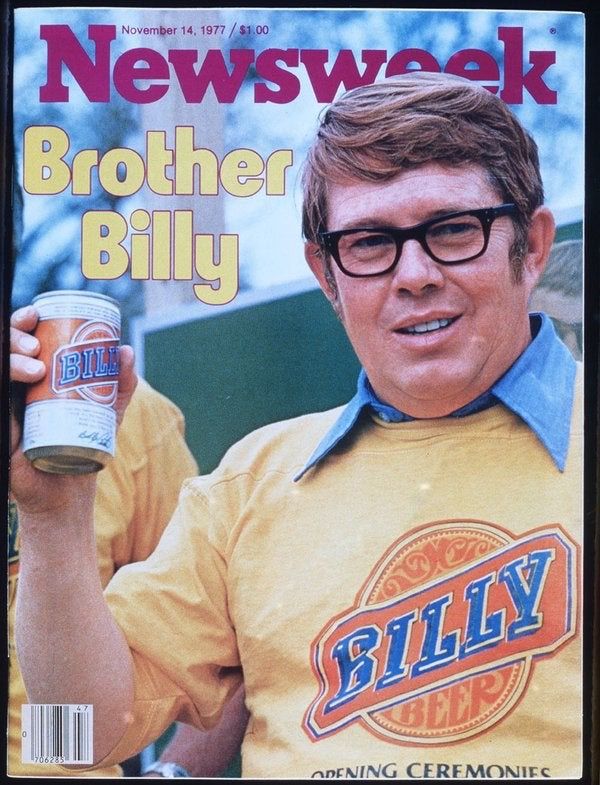
My dad cherished a can of unopened Billy Beer, a beverage known more for being endorsed by the beer-guzzling brother of then President Carter than for its taste. And he proudly displayed that single can of Billy Beer on our living room mantle next to the family Bible handed down by the teetotaling Robinsons on my mother’s side. I’m sure he saw fortune in his future and a day when that can of Billy Beer would be worth thousands of dollars.
But maybe it was more than that.
Billy Carter, the brother to former President Jimmy Carter, is shown with a can of Billy Beer that he endorsed and promoted in the late 1970s.
Eventually, my RC cans were dispatched to a grey, weathered barn that was starting to lean more than it was upright with a good part of its rusty tin roof curled back like the shavings from an apple’s peel.
That summer I remained true, continuing to drink RC and adding to the collection, the cans climbing the slats around a feed crib that contained more rats than healthy ears of corn. But the rains came, as they do, and the bottom of the cans began to rust. And I picked up football in the fall and then basketball in the winter and spring. There would be girls and then a driver’s license and the cans would topple and fall when the winter winds blew between the ever-widening planks of oak.
Eventually, the rust spread, covering the faces on the cans, and I could no longer see if I was looking at Freddie Patek or Pete Rose. One fall day, the cans were thrown into black plastic bags and tossed in the back corner of the corn crib, that darkest part down where the rats made their nest.
But the can of Billy Beer remained. For a while.
More than 40 years later, the homeplace remains, as does my mom. She’s like the maples she planted in that western Kentucky dirt. Still strong and rooted in place. The old barn has long been torn down, replaced by a shiny red, two-story building built by the Amish from down Crittenden way that is more guest living quarters than it is a work shed.
The RC Cola cans are also long gone, dispatched not soon after my father left when most of his blue jeans and those country western shirts with the pearl snap-on buttons were taken from the closet and dumped in the backyard, doused with lighter fluid and a match was struck.
I don’t know if I ever asked my mother if she took the cans to a recycling center or just simply put them in the burn barrel, their sides blackening, indistinct. Just another can in a smoldering mess of household garbage. Forgotten.
Come to think of it, I don’t know if we’ve ever really discussed the divorce much.
The separation stung at first, but eventually as you get older and perhaps wiser and maybe forgiving, you learn to accept the betrayal and loneliness. Like the collector cans, the pronouncement of “till death do us part and forever and ever” was something that was just taking up space and needed to be thrown out. The connection gone.
Still, there are days, like today, when an overheard bit of conversation or a question about obsession takes me back to those cans of my childhood. It’s those memories that remain. Good and bad.
It’s your mom going to the IGA, picking up a six-pack of RC Cola and there being two more Freddie Pateks in the bunch. You disappointed, but not saying anything as you pull the tab and drink the bland soda, hopeful for another day.
It’s spray painting a black square on the side of a brick wall. And bits of that square block still clinging to that sturdy brick, 40 years later.
It’s clinging to the past and hoping that what you hold will only become more precious as time goes on. But, more importantly, it’s realizing when it’s time to just take it out to the burn barrel, light a match and move on.
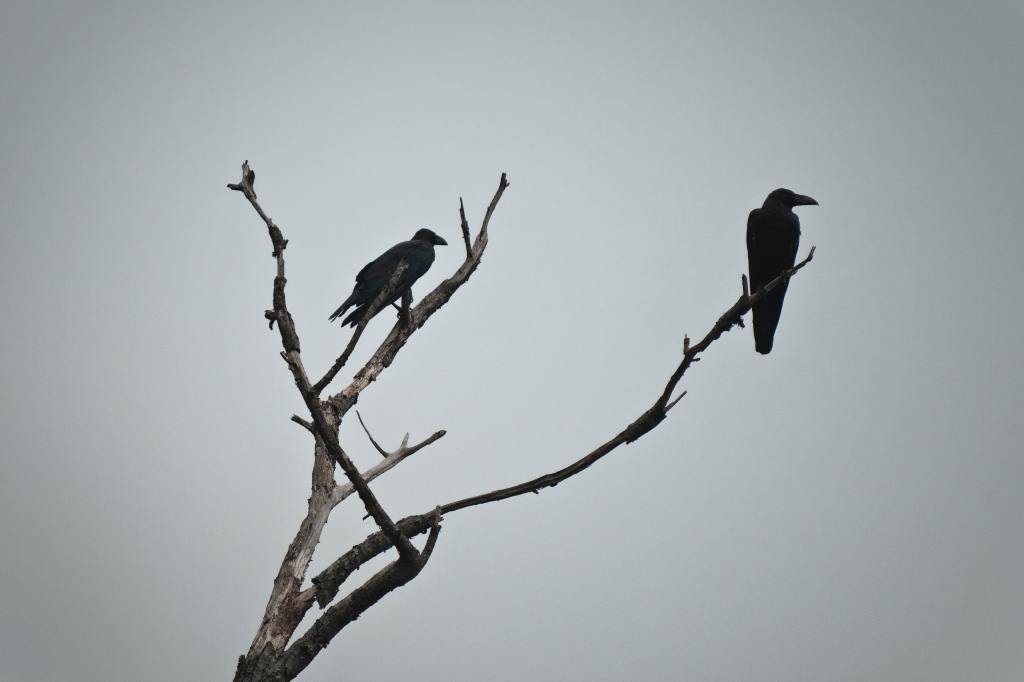
I hear the incessant “caw, caw, caw” and I want to place my hands over my ears and hum the words to a happy song. But nothing comes to my lips.
The crow is black. The crow is foreboding.
Is the crow death?
In the river bottoms, the crows come in packs, swooping low over the harvested fields, the broken stalks of corn like the limbs of war dead, half-in, half-out of the grey, boot-sucking muck.
A murder of crows is what they call that pack of black that fills the fading light of late afternoon.
“Fitting,” I mutter to myself, raising the collar of my worn pea coat to my neck, a shield against the harsh December wind that comes from the north.
I, too, am in my final season and I believe the crow knows.
I skirt the field and climb the hill and they fill the branches of the barren oak that rises up and over the farmhouse. The roof has started to sag from the weight of rain and all these years. I know that I’ll not repair it.
Inside, where my wife once stood at the stove, stirring the pot of soup, and the brown-headed girl, she being 10 then, came to me with open arms and words of “daddy, daddy, daddy,” it is now quiet. On the wooden table, there is an opened bag of bread, a slice of white lies to the side left to grow stale. Mold just a few days away.
My breath catches and I feel a tightening in my chest. I retreat back to the cold wind that whips around the porch and I stumble down the three wooden steps. I stuff my hands in my pockets and hunch my shoulders.
I don’t look up. There’s no need. I know the crow is near.
NOTE:The above work of fiction came from a writing prompt presented during a recent Pen to Paper Live session hosted by the Charlotte Lit organization. You can register here. In the session, presenter Kathie Collins challenged us to respond to the Van Gogh painting “Wheatfield With Crows” and write what moved us.An interesting note is that the painting is believed to be the last work of the celebrated painter.
Like what you see? Please share this via the following methods:
We all could learn a little something from Henry Darby.
He spends his days as the principal of a high school in the Lowcountry of South Carolina.
At night, he stocks shelves at an area Walmart. His pay goes to help needy students and families.
Henry Darby is shown in the hallway at North Charleston (SC) High School, where he serves as principal. Photo by Mic Smith.
Editor’s Note: An edited version of this story appeared as a SC Stories feature in the April issue of South Carolina Living magazine, which is distributed monthly by the South Carolina Cooperative Electric Association.
Students at North Charleston High School in the Lowcountry of South Carolina often gaze at the wall of awards principal Henry Darby has amassed over the past 40 years. He’ll ask them what they believe is the greatest honor among the stack of plaques. They never pick the starched white shirt hanging in a box.
“it reminds me of my humble beginnings,” said the North Charleston native. “It’s not the height that you reach, it’s the depth that you come from.”
The shirt came from cloth his mother gathered from an area dump. Florence Darby took the fabric home, boiled it in a kettle in the back yard and made the material into a shirt. He wore that shirt to school two to three days a week for the next four years.
Darby knows poverty, but also the value of education and willingness to work.
He recalled a day when he was 10 years old and his mother was given food stamps.
“My mother put both her hands upon my shoulders, pulled me near to her and tore up the food stamps in my face. Her words were, ‘Boy, you’re going to learn to stand on your own two feet.’ I have never forgotten that lesson.”
And he also knows there are times when others need help.
“I know what it feels like to live in poverty and it’s not a good feeling,” he said. “I just do my best to help those I can help to get out of poverty.”
“I know what it feels like to live in poverty and it’s not a good feeling. I just do my best to help those I can help to get out of poverty.”
Henry Darby, principal of North Charleston (SC) High School
In addition to his full-time duties as principal, Darby works the 10 to 7 overnight shift on Sundays, Wednesdays and Fridays at a local Walmart. His pay goes to help North Charleston students and their families struggling to buy groceries and clothing, pay rent and keep the lights on.
“The first six weeks or so it was pretty rough,” he said of his job as a stocker. “Just standing, standing, standing. Muscles I hadn’t been using before. Feet swollen, knees swollen. But I’m not a quitter. I’m one of those Vince Lombardi guys. ‘Quitters never win and winners never quit.’”
His story has garnered state and national attention and there’s been a spike in donations. That’s been heartening, Darby said.
“Americans came together to support a cause to help children. It’s almost as if we want to forget about our differences… It’s a beautiful example of how Americans can help Americans.”
Some of his friends, worried about his age, have urged him to slow down. He proudly points to the 40 pounds he’s lost over the past seven months and said he has no plans to stop.
“Whenever I can’t teach or can’t help someone, I’m just gonna say, ‘Swing low, sweet chariot. You can carry me home now.’ I just love helping people.”
Whenever I can’t teach or can’t help someone, I’m just gonna say, ‘Swing low, sweet chariot. You can carry me home now.’
Henry Darby, principal at North Charleston (SC) High School
Getting to know Henry Darby
Age: Born on Nov. 28, 1954, Darby is 66 years young.
Occupation: Principal of North Charleston (SC) High School; 17 years as councilman for Charleston County (SC); associate at Walmart since August 2020
Book smart: A collector of rare historical books, his favorites include Dr. Martin Luther King Jr.’s “Where Do We Go From Here: Chaos or Community?” and a first edition copy of “The Rise and Fall of the Confederate Government” by Jefferson Davis.
Music to the ears: He’s been playing the piano for the past 40 years and has been recognized several times for his talent. He loves to listen to jazz composer Charlie Parker.
The GOAT: There was a time he had a herd of domestic goats. “Goats will keep your yard clean, manicured. And since I was working three or four jobs at a time, I didn’t have time to cut my own grass. I loved my goats.”
Like what you see? Please share this via the following methods:
A man chooses to stop drinking. What gets left behind, what is lost?
The following is a short piece of fiction stemming from a writing prompt during the most recent Pen to Paper Live session hosted by the Charlotte Lit organization. You can register here. On the eve of the presidential inauguration, the prompt was to examine what ends when something new begins? What gets lost, what gets left behind?
The Last Toast
Today is the day I stop drinking.
Seven words skewered in pencil on the back of an overdue electric bill from the City of Decatur.
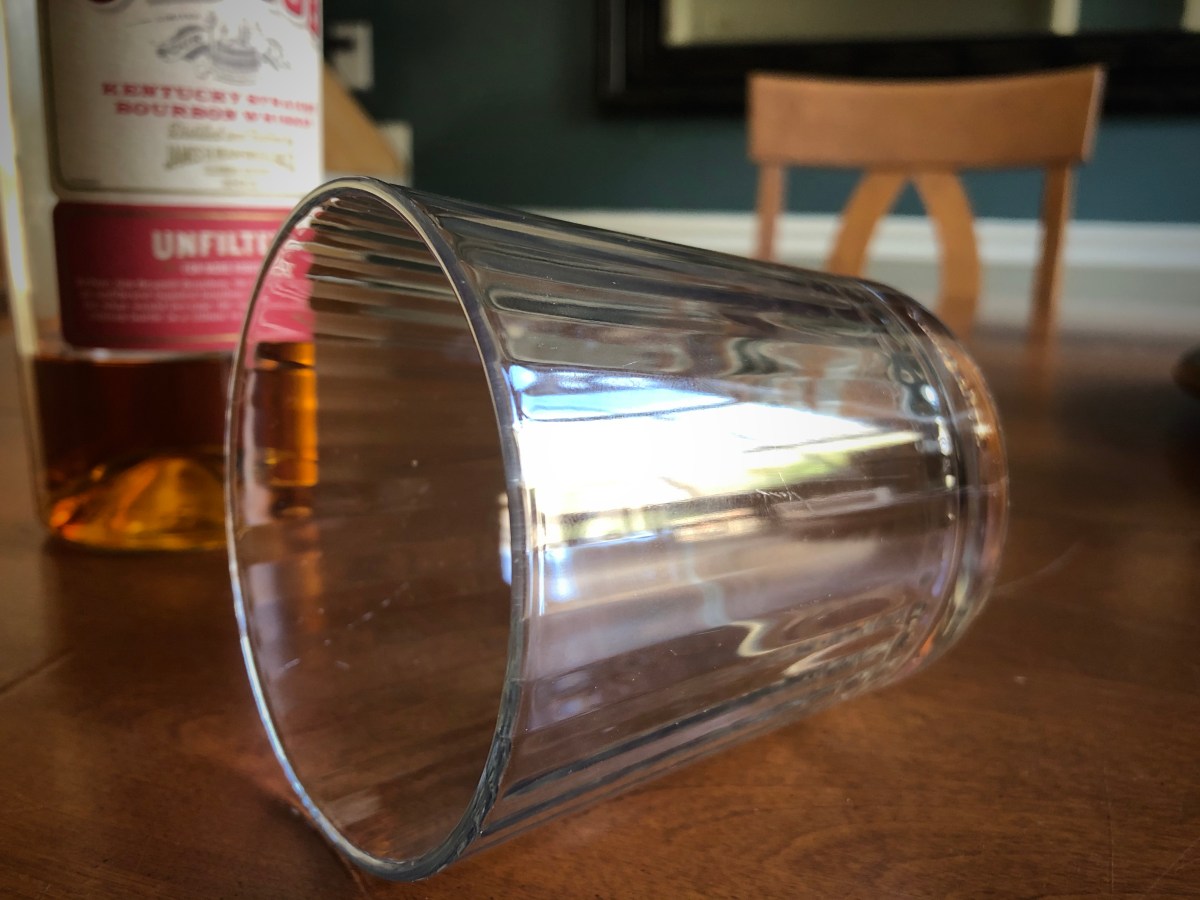
The words a promise I’d made to myself some six hours earlier. Now the empty fifth of Kentucky Tavern on its side, a small pool of the brown elixir lingering in the glass on the nightstand, a remnant of the night before.
There’s a momentary urge to bring the cool glass to my lips to feel the burn of the whiskey as it hits my tongue, that sensory overload only topped by the feeling of warmth that spreads through my torso.
I’ll miss it.
We had our falling outs, particularly that DWI three years back and those hungover mornings where I lay curled in bed instead of cutting wood. And, of course, there’s Rebecca. She said I loved the drink more than her.
For a while now, it’s been just me and the whiskey. And, for a while now, that’s been just fine.
Oh, we had our fun.
That first sip when I was 14, the bottle passed from my daddy as we sat on the tailgate of the pickup truck waiting for the doves to rise from the brush. My welcome to manhood moment.
That late summer night down in the back woods of the Chattahoochee, three dates in with Rebecca, sharing the pint in the back seat of my Pinto, that hot spice sticking to my tongue, my lips numb.
Plenty of graduation celebrations, keg parties, afterwork socials, snips on lunch breaks, morning pick-me-ups, afternoon get-me-throughs.
We became good friends. Maybe too good of friends.
Comes a time when a man’s got to do what he thinks is best for him. And for me, that’s leaving you, whiskey.
Don’t you come knocking again on my door.
Please.
Like what you see? Please share this via the following methods:
The U.S. Postal Service may well splash the words “through rain, sleet, hell or high water” the mail must go through. But in my world, it’s the lady on the porch who is as constant as the sun rising and the sun setting.
She’s there at the corner of Elm and Second streets, her house sitting perpendicular to the stop light that always seems to catch me, a road block to my morning rush.
I usually curse, looking at the dash, the clock showing me I’ve got 3 minutes to get somewhere that’s going to take me at least 15. And I sit. One hand fast-tapping a rhythmic beat on the steering wheel, keeping time with the wasted seconds, the other pushing the buttons on the radio, pulsing, rock music filling the cab of my 15-year-old Honda.
I glance over and she’s there, often in a faded aqua blue house dress, her hair pulled tight in a severe bun, her gaze forward, where to I have no idea. In her wooden rocker, she methodically rises and falls, her feet flexing, hands and fingers still, except for a slight startle when a horn from the impatient driver of the black Suburban behind me sounds.
It’s funny that I think of her when my boss hands me my pink slip later that day. “I warned you,” she says, watching as I clear my desk, tossing a calendar from the year before into a small box of my meager belongings. “You’ve got to show up to work on time.”
I think of the woman on the porch. And of time.
And I know that tonight when I inevitably stop at that intersection, there at the corner of Elm and Second, she’ll be there. And I wonder if I will raise my hand and wave.
For there will be time.
Like what you see? Please share this via the following methods:
The smell may have been the first thing he noticed. The scent of rawhide leather escaped the package as he pulled the baseball glove from the box wrapped in red paper and green ribbon.
Teague ran his fingers over the interlocking weave of leather, the stitches wound tight, strips of rawhide hanging loose like the leaves of the weeping willow that stood watch in the back corner over their 30-acre farm in the river bottoms.
The leather was stiff in his hands. Teague balled his hand into a fist and punched once, twice, three times into the pocket, seeking some give, yet the leather unforgiving. He knew the warmth of spring and summer and the sweat from his hands would loosen the rawhide; the glove bending, conforming to Teague’s 15-year-old fingers.
For nearly five years now, he’d used his father’s hand-me-down when he and the other boys gathered to play ball on summer afternoons, swinging and sliding until the western sky turned a burnt orange, chasing them from the field. It was a battered, dusty glove that had been duct taped together and had seen its fair share of ball games back when his daddy would knock baseballs 350 feet over the old strip of coal mine belt serving as an outfield fence.
“Figured it was time for your own,” Big Robbie had said when he slid the box across the kitchen table earlier that morning. It was just the two of them now. Rains had fallen that summer and the corn grew tall and green, but money was still tight.
Snow was on the ground now. The field bare except for the rotting husks that dotted the back 30 acres like remnants from a Civil War battlefield, the stalks like the limbs of Confederate dead.
Spring would come. And with it, warmer days and the sound of song birds. The ground would be broken, the plow leaving streams of rich, loamy, black soil in its wake, and there would be work. Lots of it for the seed needs to reach the ground.
Yet, in those few short moments before day turns to dark and the sun sets below the Ohio, there would be time. Time for a game of catch between a boy and his father, the rhythmic pop of the baseball hitting the pocket of the glove marking the seconds, minutes and hours.
Editor’s Note: The passage includes characters and settings from “River Bottom,” my work-in-progress novel that tells a story of a teenage boy living along the Ohio River bottom land in the summer of 1983.
Like what you see? Please share this via the following methods:
Is there a certain memory that has stuck out in 2020?
For myself, it was a grueling hike up a mountain in the South Carolina Upstate.
In a year dominated by the pandemic, most writers have opted to not write about the virus that has killed thousands and led to even more division in our country. The reason may be simply because most writers prefer to use writing as an escape, says Paul Reali, one of the co-founders of the Charlotte Center for Literary Arts organization.
“It’s particularly hard to write about the pandemic, especially when we’re sitting in the middle of it,” Reali said during a Tuesday, Dec. 15 Pen to Paper Live writing session, which is a weekly gathering where writers are given a mini-lesson and writing prompt. The sessions, which will resume in January 2021, are free and preregistration is required.
Writing can lead to revelation, Reali says, noting that “we write to make meaning.”
Sometimes a subject — such as Covid-19 and as he calls 2020 “the year that wasn’t” — may seem way too big to tackle, Reali says. It is those times when a writer must “chip away” and document those things one has witnessed and felt over the past 12 months. These pandemic experiences can be documented through short vignettes similar to the recollections told in the New York Times Metropolitan Diary.
As part of the Pen to Paper Live session, Reali encouraged the nine participants to write a moment from their pandemic experience. The following is my story.
The Climb
We stop halfway up the mountain. The air is thinning as we’ve climbed another 1,000 feet and our lungs are burning and our legs heavy. It’s a quiet Thanksgiving Day afternoon. If we listen closely, we can hear the Middle Saluda far below, its water weaving around and over boulders draped with green, clingy moss.
“Do we continue on or just turn around,” my wife asks.
She is in much better shape than I and has always had more energy and spirit. In a lot of ways, I feed off of her and love her for that. But here and now, my ankles hurt and there is a gnawing tug along my muddied and bloodied right calf. I’m close to calling it quits.
There’s been job loss, death and multitude of change in 2020. We had decided to flee to nature as we considered how to give thanks in a year of Covid-19 and had mostly hiked the 4-mile trail at Jones Gap State Park alone.
As we sit trying to capture our breath and lower our heart rate, we see two hikers carefully picking their way among rocks and tree roots on the narrow trail to and from Ruby Falls. They are much younger and hipper and the couple pulls up their neck gaiters as they near.
We step back off the trail and we’re enclosed by the rhododendron and mountain laurel, a near disappearing act. They see us, husband and wife, hands held and maskless.
“You’re nearly there,” he says.
“Trust me,” she says, “it’s totally worth all the pain.”
After they pass, we stand on the trail. We look upward, a steep stair stepper of unforgiving rock awaiting.
“You lead. I’ll follow,” my wife says.
I look at her and smile. I turn and then we climb together.
Like what you see? Please share this via the following methods:








 Michael Banks 360