
Thank you for taking the time to answer these questions. They’ll help me plan out the distribution of my upcoming novel, “Bend In The River,” which should be released in September 2025.
Thank you for taking the time to answer these questions. They’ll help me plan out the distribution of my upcoming novel, “Bend In The River,” which should be released in September 2025.
When I’m asked “Where you from?”, these are the people and places that come to mind.
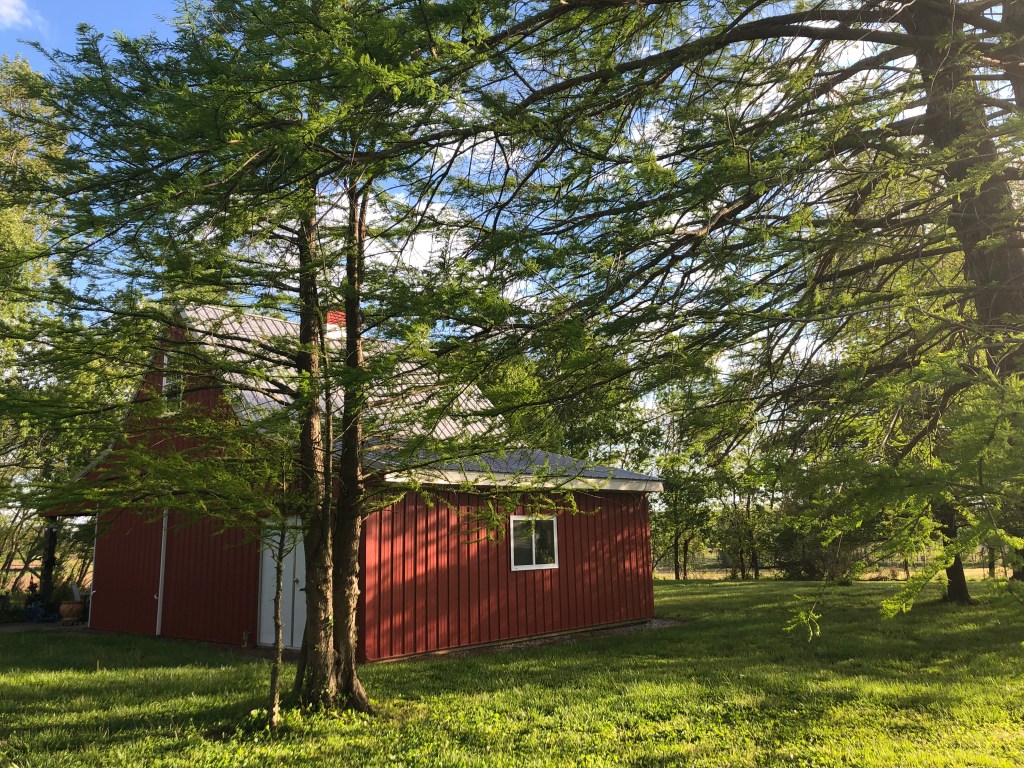
For the past 25 years, I’ve lived in North Carolina – minus a 15-month sojourn to the Mississippi Delta, where I believe I rediscovered the writer living within me.
Prior to my move to Gaston County (NC) that last week of September 1999, I’d lived my entire life — now counting 58 years — in Kentucky. Western Kentucky to be exact.
There’s a town within Union County, not far from the Ohio River, and surrounded by coal fields and corn and soybeans, where I grew up and spent a good portion of my early career in newspapers.
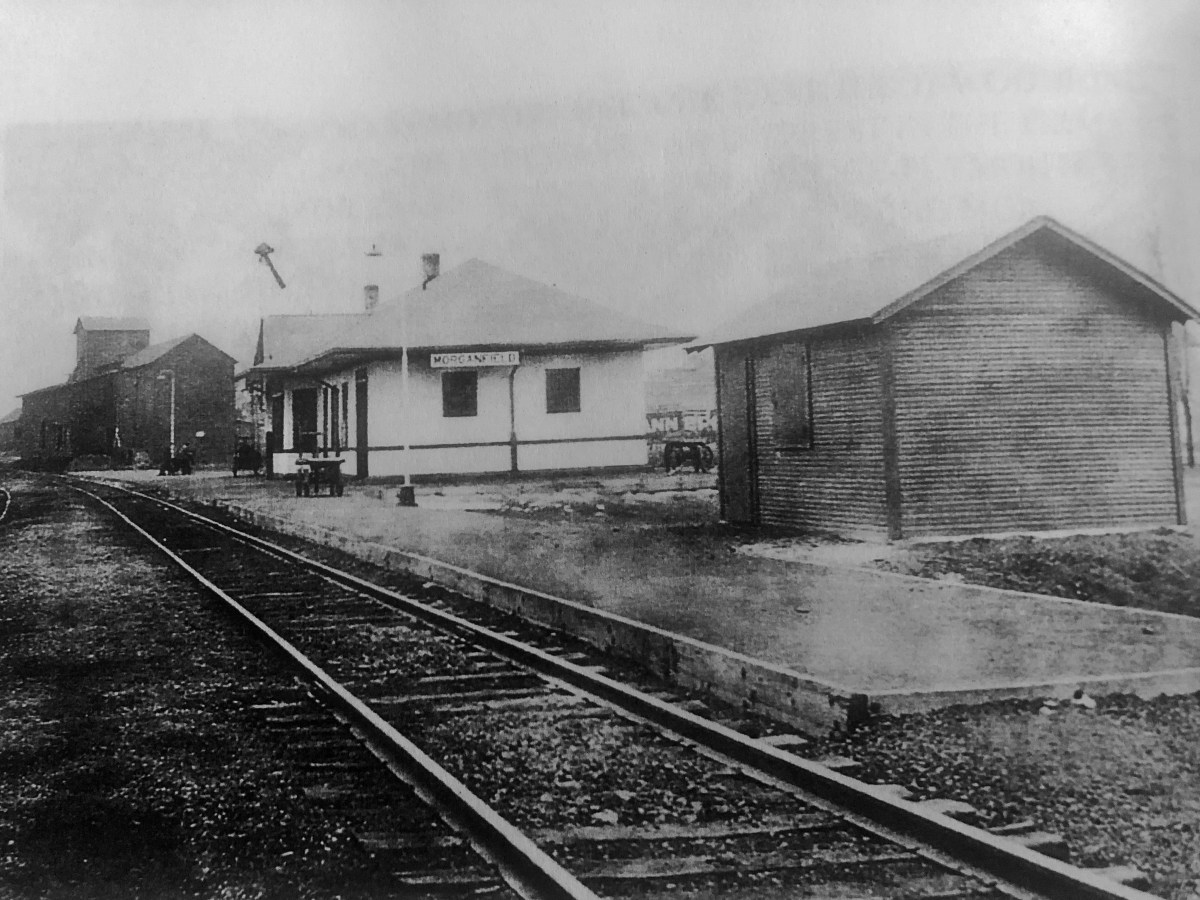
Morganfield is my hometown and my maternal grandparents lived across the road and my uncles and cousins are sewn along Highway 130, which we called Grove Center Road for most of my childhood.
I attended college at Western Kentucky University in Bowling Green and spent nearly two years working at a newspaper in Murray, Ky., and another in Calhoun, Ky.
I know that part of Kentucky – its topography (rolling hills interspersed with fields of grain) and its people. Oh, the people.
I’ve done a bit of looking into the Banks and Robinson family trees and discovered, for the most part, my people came to Kentucky in the late 1700s and early 1800s from Virginia and North Carolina. Maybe that notched wedge of land — not far from where the Wabash River dumps into the Ohio — was their very own land of milk and honey as not many of my relatives have left.
I’ve discovered those woods and creek beds and thickets of my youth often find their way into the stories of that I write today. The ballfields, taverns and courthouses of my later years also linger and serve as background in those same stories.
It’s the same with the people that I’ve interacted with during my time on earth. There are bits and pieces of many of them mashed together to create delightful and, often, confounding characters who fill my scenes. Their dialogue and the tales they spin are the ones I’ve heard from the lips of others or imagined so.
I’m every bit Kentuckian.
Outside my window, the redbuds are in their early stages, heavy with purple. Mockingbirds, searching for a mate, squawk and defend their turf. The days are longer and I stay seated when the morning sun slants through the window and its warmth lands on my shoulders.
I think of the first Saturday in May and the crash of the starting gate and hooves hitting the dirt as they near the first turn at Churchill.
“Have you got your Derby horse,” they’ll ask.
“Soon. Very soon,” I reply.
When the 20 horses and their riders take the track, the band plays “My Old Kentucky Home” and New Yorkers and Californians and Texans in their pastels and linen will tear up and raise their frosted glasses and toast that “old Kentucky home, far, far away.”
But for us, who truly know Kentucky, it’s a lot more personal.
It’s spring and pulling up old barn wood and digging up fat earth worms and flinging them into country ponds lined with green moss and waiting for the smallmouth to strike.
It’s walking the first rows of a corn field in late July, enduring the slice of a sharp leaf, to find the sweet corn and how it will taste when its boiled and the butter and salt will stick to your lips.
It’s the sounds of old hymns sung by others before us and incantations of the traveling preacher man filling the pews at Bethel Baptist, the harmonies and spirit pouring from the open window and weaving among the headstones covered in autumn’s rust.
It’s winter and it’s dark and the hawk — that brutal wind — roars from the north and we gather by fires and sip bourbon and tell stories from days warmer and know that more await.
Editor’s Note: Work continues on my novel, tentatively titled “Bend In the River,” that includes many of the places and characters compiled from my days and nights spent in Kentucky.
The waiting game at The Depot Tavern would often set a mind to wandering about the future.

Puddles form at the base of the bottle of Coca-Cola. If you tilt the glass, the brown sugar water runs and you see etched on the bottom far-off places like Little Rock, Arkansas; Jacksonville, Florida; or Rocky Mount, North Carolina. In your hand, the Coca-Cola warms, and more sweat runs, staining the worn tabletop.
At the Depot Tavern, bottles of PBR rest on beer guts that strain the buttons, gripped by the grease-stained, gnarled-knuckled fists of the mechanics at the Chevy dealership. The beer never warms as they order a round and another and another, chasing that buzz between the 5 o’clock punchout and the 7 o’clock chicken pot pies with the old lady and rug rats.
He asks if you want another Coca-Cola. You lift the bottle, but the drink is warm like spit and you don’t swallow.
Why don’t you go outside, he says. I won’t be much longer.
There’s an old train station across the street. Deserted and gray like the crumbling concrete steps. You stand on the rust-covered tracks and look east down where they cut open the pigs, their blood sopped by sawdust. To the west is colored town and then nothing else.
You think of Little Rock. And Jacksonville. And Rocky Mount.
The trains don’t run
where dreams bleed and gutted,
the long walk back home
Editor’s Note: This piece of Haibun poetry was prompted by a recent Pen to Paper Live session hosted by the Charlotte Lit organization. Charlotte Lit hosts the free sessions weekly. You can register here.
The session was led by Kathie Collins, who said Haibun is a Japanese form popularized by the renowned poet Bashō in the 17th century. “Think of it as a mini-lyric travel essay finished off with an insightful postscript in the form of a haiku.”
These 2024 Braves are a special bunch who are carrying the hopes of a school, an entire county and all those who have gone before them.
Writing is a funny thing. One can never be certain what will resonate with folks.
In some ways, it’s akin to coming across a rain-filled ditch. You may have a good idea of what awaits, but you never really know if that first step is going to be free and easy to the other side or leave you underwater, gasping and spitting as you try to climb to the surface.
When I first started to put down the words Friday morning to the “Ghosts of Baker Field,” the work was fed by the very stark realization that it’s now 40 years since I played my final game of football. And as I’ve gotten older, the memories are more and more persistent, often tapping on my brain in the early hours just before dawn.
I was quite surprised with the response. More than 1,200 visitors read the story and hundreds more liked and shared the article via Facebook with many offering kind comments that were most appreciated.
Former players from far and near, old and young, shared their memories of their final games and their lifelong bonds with their teammates. Family members told of how they were unsure of what to answer when their son, defeated and dejected after a season-ending loss, sprawled out on a patch of torn turf in some faraway town, looked up at them and asked, “What am I supposed to do now, Momma?”
But the highest praise came from Union County head football coach Derek Johns who said he read the column right before the team took the “Brave Walk” down the hill at Baker Field Friday night, where later they would celebrate a dominant, mistake-free 43-21 win over Belfry that sends them on to the state championship game.

That comment really hit home.
In a way, Johns allowed the ghosts of Baker Field into that locker room one more time when he shared those words. The Thin Twenty from 1972. The 1976 and 2008 teams that had stood exactly where they were only to come up just short. And the 5-6 team from 1984 of which I was a part of.
“Once a Brave, always a Brave.” I heard that from so many.
These 2024 Braves are a special bunch who are carrying the hopes of a school, an entire county and all those who have gone before them. They’re now 12-2 and will play for the Class 3A state title when they take on Christian Academy of Louisville next Saturday at the University of Kentucky’s Kroeger Field.
This band of Braves has gone where no other Union County football team has ever gone before. They’ve already established their place in local lore. What awaits is a place in the state record books.
But, perhaps most prominent in their minds, is the guarantee that they get the chance to lace up the cleats and put on the pads. They’ll pound their fists upon their teammate’s shoulder as they huddle at midfield, eyes locked, breath heavy. And, at the end, when the final horn has sounded, they’ll form a circle, take a knee and come together as a brotherhood one more time.
You see: It’s just one more game.
One more game.
Editor’s Note: Michael Banks was a member of the 1982, 1983 and 1984 varsity football teams at Union County High School. He is once a Brave, always a Brave.
Ask a former football player what’s their one wish and often the answer is: One more game. Just give me one more game.
Forty years ago, on a cold November night, I played my final snap of high school football.
The Bermuda grass at Owensboro’s Rash Stadium had turned a muddy brown and it was a meaningless football game between two .500 teams. There was really nothing memorable for the scattering of fans – mostly family and friends — spread out along the metal bleachers. The game was one of those “three handoffs and a punt” and the final score was 7-0.
But the memories of that game, and others before it, remain all these years later.
Tonight, on a cold November night, my alma mater will try to do something that’s never been done in the school’s 60 years of existence: advance to a state championship football game. Not just win a state crown, but to actually make an appearance in the title game.
That’s pretty heady stuff for a Western Kentucky community of 16,000 mostly made up of farmers and coal miners. Good country folk, you see.
From afar, I’ve followed the fortunes of the 2024 Union County High School football team as they’ve marched to an 11-2 record and an appearance in the Class 3A state semifinals. Many could argue tonight’s home game at Baker Field vs. 11-2 Belfry is the biggest in school history. You can view and see the game live via local radio station WMSK’s Facebook page.

You ask a former football player what’s their one wish and most will answer quickly: One more game.
Just give me one more game.
There’s something about football that sticks with you. Something that makes those hot August practices, that cleat drug across your shin, a dislocated finger, all worth it. Maybe it’s that smell of fresh-cut grass, that rhythmic drum beat from the marching band, the feel of the leather football on a crisp fall night.
It’s pure adrenaline. The Calloway Special. A pancake block and a hole wide enough to drive a tractor through and 45 open yards to the endzone. It’s an airborne opponent reaching for an errant pass and you poised and ready to deliver the hit.
It’s a feeling many of us will chase long after we’ve played that final snap.
Any one of us former players would love to be in that locker room tonight. Fingers and feet tapping in anticipation, stomach in a knot. Forty years later and I can still see my own teammates, waiting, ready. Frenchy. Big Tim. Duck. Barry. Word. Burgoo. Danny. PeeLo. Jarrod. Omaha.
You see. It’s not just yourself you’re playing for. But it’s also for a community, a school, your teammates and all those ghosts of Baker Field who put on the pads and walked the turf you walk tonight.
Go, Braves, go!

Editor’s Note: Michael Banks was a member of the 1982, 1983 and 1984 varsity football teams at Union County High School. None of those teams advanced to the state playoffs, but he made some lifelong friends along the way.
Looking ahead as to what awaits after 57 years can be both terrifying and thrilling. I have absolutely no idea how this story is going to end.
Today, Jan. 23, 2024, I turned 57 years old.
And, if I give it great thought, perhaps my mindset is not much different than that 5-year-old boy who sat at a kitchen table in rural western Kentucky and blew out five wax candles on a cake dripping in chocolate.
I have absolutely no idea of what the future holds for me and that is both as scary and thrilling as a black spider that falls upon my bare arm and starts to inch its way upward.
There’s been plenty of living in those 50-plus years between. I’ve experienced great joy and profound sadness. My heart’s been broken and it’s also found a love like none other. There have been moments when I thought I was at the very top of the heap and a few days when this man didn’t think he could sink much lower.
It’s called living and I’ve done it.
I think of the 2008 movie “The Curious Case of Benjamin Button” in which the main character is born an old man and proceeds to age backwards. The film is based on the short story of the same name written by F. Scott Fitzgerald and published May 1922 in Collier’s Magazine. Fitzgerald’s story challenges the idea that life would be better if we could erase its hurts.
In one scene from the movie, a tugboat captain, Mike, says, “You can be mad as a dog at the way things went, you can swear and curse the fates, but when it comes to the end, you have to let go.”
That sentiment took me a good while to fully understand and be willing to embrace, but I’ve done it and believe it’s made me a better person and improved my relations with others.
Another theme from the story is one of new beginnings.
“It’s never too late, or in my case, too early, to be whatever you want to be,” Benjamin says. “I hope you live a life you’re proud of. If not, I hope you have the strength to start all over again.”
This matter, I am knee-deep in. There are things I am proud of and a few misdeeds I’d just as soon forget.
For most of my life, I worked as a journalist. But that’s no more and now I write for others and myself. I continue to work on two novels and various short stories, but there’s no certainty as to whether the work will be completed and if others will want to read those words.
It’s a great unknown. It’s something that will keep you up at night and also kick you out of bed when a new day dawns.
Even so, I still like chocolate cake and there’s still the air within my lungs to blow out the candles and hopefully extinguish the past and light the future.
And I’m all right with that.
WRITER’S NOTE: These words were the result of a writing prompt hosted by the Charlotte Lit organization on Jan. 23, 2024. Instructor Megan Rich challenged the participants to think of birthdays and consider the two shifts — time and seasons — and how they have affected one’s birthday through the years. The one-hour Pen to Paper sessions are free and held online via Zoom most Tuesday mornings at 9:30 a.m. EST. To sign up for the session go here.
Flash fiction winner takes me back to the Delta.
Happy to announce that my story, “Calling on Gabriel”, was selected as the first-place winner of the 2023 Ruth Moose Flash Fiction Contest held by the Charlotte Writers Club.
Flash fiction requires you to tell a story within a certain amount of words, this one being 500.
Me and my wife spent 15 months living in the Mississippi Delta. It’s a warm, wet place where cotton and writers emerge and thrive in the rich, black soil.
The Delta is where I found my voice as a writer and its people and places remain with me.
This is a story of the prodigal son, the one forgotten and the day when death comes for momma. It’s called “Calling on Gabriel.”
Judge Matt Dube said: “An overlooked daughter watches her mother waste away waiting for the return of her prodigal. Too late, the daughter’s patient attention is acknowledged in this spare story that brings together a series of small, isolated worlds from just a few words, a snatch of melody.”
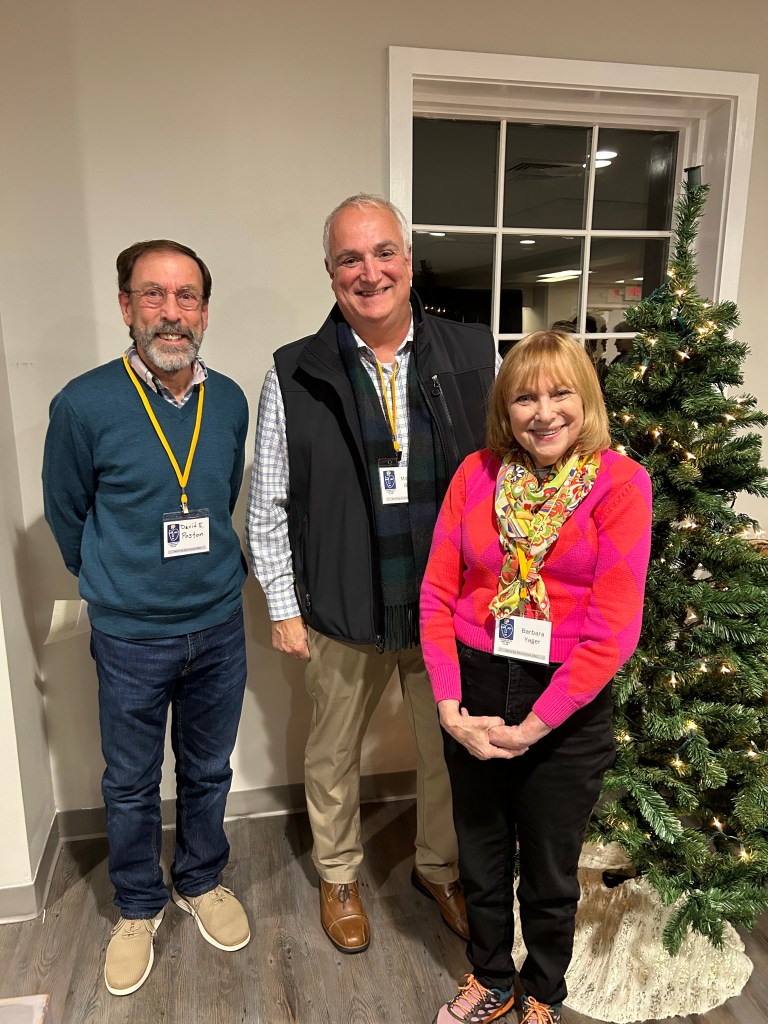
Western Kentucky author Lee Cole’s debut novel Groundskeeping details a love-hate relationship with his home state.
I left Kentucky in the fall of 1999. For 32 years, the state and its people were pretty much all I’d known.
Author Lee Cole was also born in Western Kentucky, about 90 miles downriver near Paducah. He knows well the people, the places, the politics that make up a state I still hold dear. His debut novel, Groundskeeping, is a testament to that.
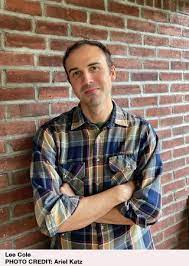
LEE COLE was born and grew up in western Kentucky, graduating from Lone Oak High School.
A recent graduate of the Iowa Writers’ Workshop, he now lives in New York.
Earlier this month, I blazed through Groundskeeping, which was released March 1, 2022. It’s fine, smooth writing inhabited by characters you’ll want to share a beer with or leave out in the cold on the back step on a wet winter morning. All necessary elements of a good story.
The protagonist in the story is a 28-year-old aspiring writer named Owen Callahan, who works as a groundskeeper at the fictional Ashby College and lives in the basement of his grandfather’s home. There is a budding relationship with Alma, a Bosnian-Muslim immigrant.
Louisville features prominently in the novel as well as portions of Western Kentucky. The 2016 election serves as a backdrop and Groundskeeping tells well the political division between family members that still remains today.
Maybe you call Groundskeeping a love story from a slightly different point of view. While there is Owen’s pursuit of Alma, really the love story may be all about Owen finding peace with the people and place he calls home.
As Cole told the Louisville Courier-Journal in an interview published in March 2022, there have been many stories told of characters who long to leave Kentucky, experience the “real world” outside and return home later with a renewed appreciation for the state.
“In other words, this theme of longing to go and at the same time feeling drawn homeward has a long history in Kentucky (and Southern) literature,” Cole said.
I think there are plenty of Kentuckian Expats who share that love/hate relationship with the state. While there, we can’t wait to leave. And once away, we’re consumed with homesickness.
Hopefully, the thing that remains is empathy.
Elton John’s songs, “Someone Saved My Life Tonight” and “Daniel” hold special meaning for two.
When you work guest relations at a stadium that hosts more than 70,000 people in a setting, you’re going to get the full gamut of personalities: the good, the bad, the ugly.
Sunday night, before Sir Elton John took the stage at Bank of America Stadium in Charlotte, I met two beautiful people who shared the story of one very special gift.
Steve Hilfiker and Vannessa Blais had come to the concert together and I greeted them as they entered the stadium atop my usual Section 123. They shared with me their mutual bond: that being the heart that beat in Steve’s chest.
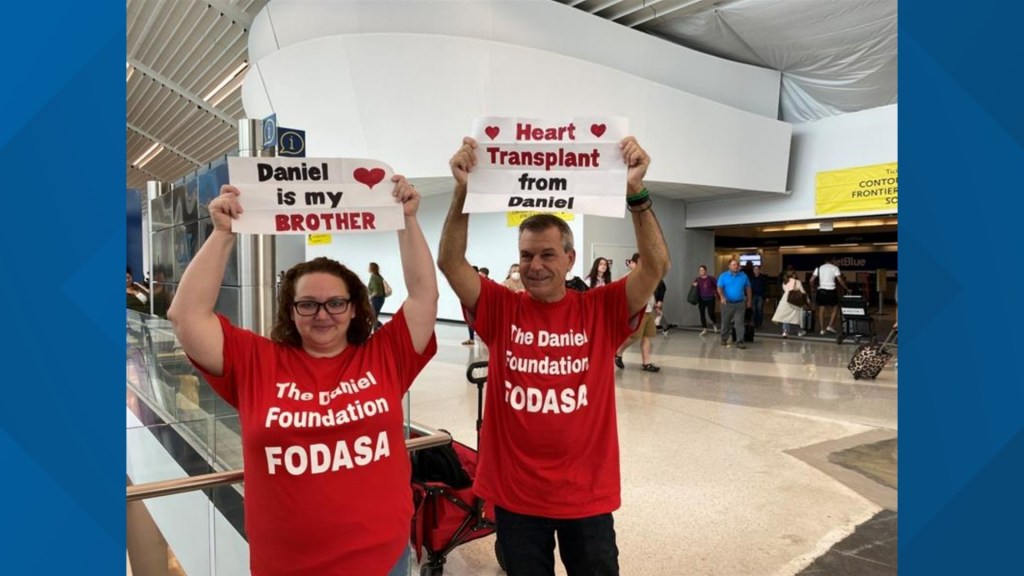
Steve, who lives in Fort Myers, Fla., is a transplant survivor and the heart that’s kept him alive these past few years is that of Vannessa’s brother, Daniel, a North Carolina man who passed away in 2020. The matching shirts that they wore to Sunday’s concert read: The Daniel Foundation.
Steve has made it his mission to raise awareness about cardiac sarcoidosis, the disease that very nearly took his life, and promote more effective methods for early detection and treatment of CS. His story is shared in the short documentary, “Stoneheart: An Undying Gift,” screened at this year’s Cannes International Film Festival.
Both Steve and Vannessa said it’s important to tell of the importance of organ donation and share the message of hope.
Steve mentioned the words in Elton John’s hit song, aptly titled “Daniel,” that holds a special meaning to him.
""Do you still feel the pain, of the scars that won't heal? Your eyes have died, but you see more than I. Daniel, you're a star in the face of the sky."
Around Steve’s neck hung a stethoscope. He said that when Sir Elton would sing “Someone Saved My Life Tonight,” Vannessa would place the stethoscope to Steve’s chest and listen to the sound of her brother’s heart, still beating, still there, still present.
And later Sunday night, under a dark, starless sky, I listened to Elton’s voice and thought of Vannessa and the stethoscope pressed against Steve’s chest, and I marveled at the good we can do, the generous we can be, and the moments we miss if we just don’t stop and listen.
Someone saved my life tonight.

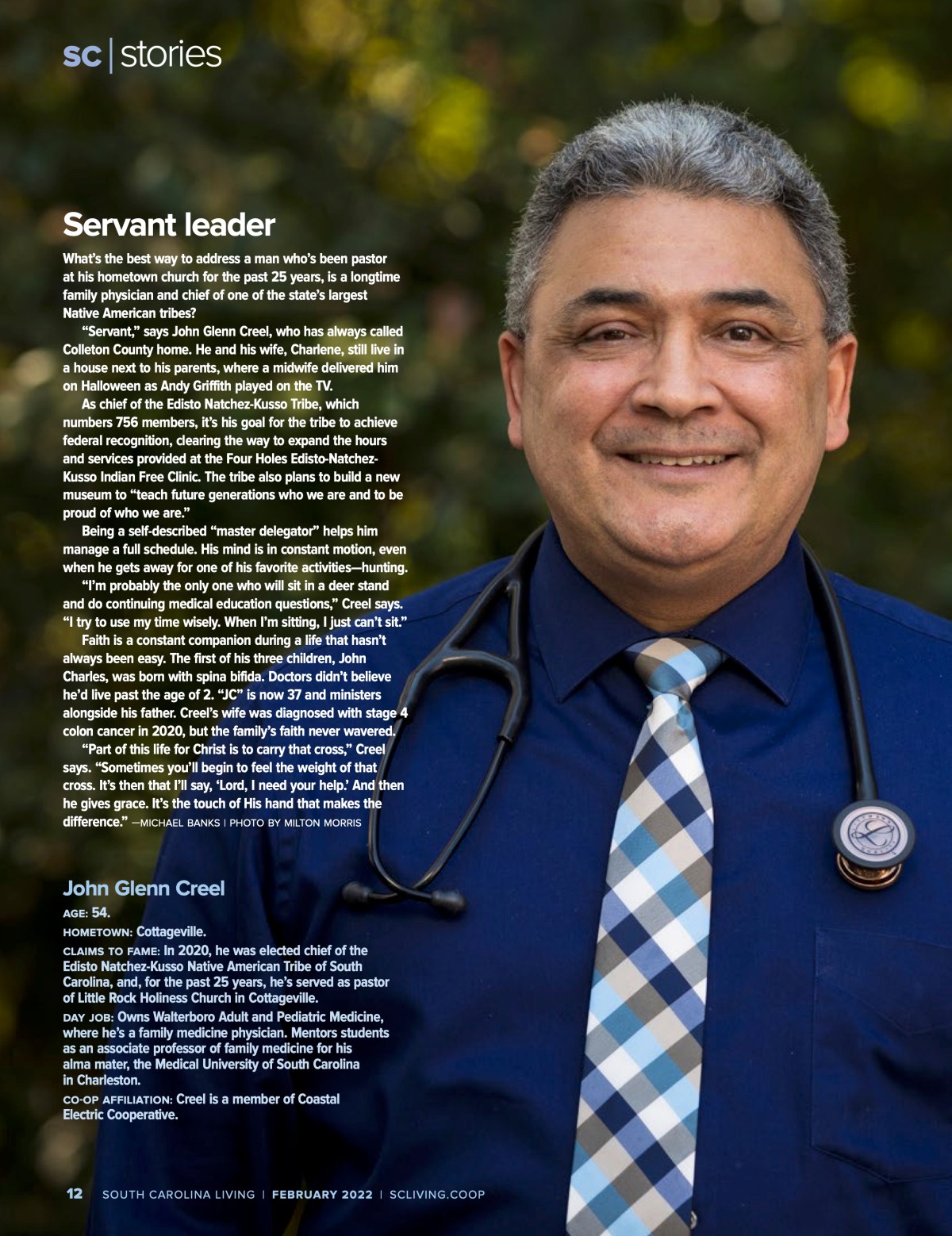
John Glenn Creel is a family doctor that runs his own practice, Walterboro Adult & Pediatric Medicine, and is chief of the Edisto Natchez-Kusso Tribe of SC and pastor of his own church, Little Rock Holiness Church.
“I try to use my time wisely. When I’m sitting, I just can’t sit.”

What’s the best way to address a man whose been pastor at his hometown church for the past 25 years, is a longtime family physician and chief of one of the state’s largest Native American tribes?
“Servant,” says John Glenn Creel, who has always called Colleton County home. He and his wife, Charlene, still live in a house next to his parents, where a midwife delivered him on Halloween as “Andy Griffith” played on the TV.
As a child, he struggled in math and reading and he even repeated the fourth grade. His goal of becoming a doctor seemed unattainable.
“I just thought it wouldn’t be possible being a minority and a minority in a very rural community,” he says. “We had limited income, limited resources. We’re Native Americans, but we’re not federally recognized. That was a big obstacle.”
As chief of the Edisto Natchez-Kusso Tribe, which numbers 756 members, it’s his goal to achieve that federal recognition, clearing the way to access for federal grants. That money can be used to expand the hours and services provided at the non-profit Four Holes Edisto-Natchez-Kusso Indian Free Clinic he operates, as well as build a new museum and help teach “future generations who we are and to be proud of who we are.”
That’s important, says the father of three.
“I’ve done the best to try and balance things and keep the focus on the family. That’s how it was with my parents. We were always together. Family’s important. So is being in a small community. It’s not the just the family and parents that raise the child, it’s the village or the community. And our communities have always been close-knit.”
Being a self-described “master delegator” helps him manage a full schedule. His mind is in constant motion, even when he gets away for one of his favorite activities — hunting.
“I’m probably the only one that will sit in a deer stand and do continuing medical education questions,” Creel says. “I try to use my time wisely. When I’m sitting, I just can’t sit. I can prepare sermons when I sit in the stand.”
Faith is a constant companion during a life that hasn’t always been easy. The first of their three children, John Charles, was born with spina bifida. Doctors didn’t believe he’d live past the age of 2. “JC” is now 37 and ministers alongside his father. Charlene was diagnosed with stage four colon cancer in 2020.
“Part of this life for Christ is to carry that cross,” Creel says. “I don’t mind carrying the cross, because it’s wonderful. Sometimes you’ll begin to feel the weight of that cross. It’s then that I’ll say, ‘Lord, I need your help.’ And then He gives grace. It’s the touch of his hand that makes the difference.”
John Glenn Creel
Age: 54 (birthdate 10-30-1967)
Hometown: Cottageville, S.C.
Claim to fame: In 2020, he was elected chief of the Edisto Natchez-Kusso Native American Tribe of South Carolina and, for the past 25 years, he’s served as pastor of Little Rock Holiness Church in Cottageville.
Day job: He’s owner of Walterboro Adult and Pediatric Medicine, where he’s a family medicine physician and mentors students as an associate professor of family medicine for his alma mater, the Medical University of South Carolina in Charleston.
Co-Op Affiliation: Creel is a member of the Coastal Electric Co-Op in Walterboro, S.C.
Editor’s Note: A version of this SC Stories profile was featured in the October 2021 issue of South Carolina Living, a magazine that is distributed 11 times a year to more than 1 million South Carolinians by The Electric Cooperatives of South Carolina.




 Michael Banks 360