The waiting game at The Depot Tavern would often set a mind to wandering about the future.
Puddles form at the base of the bottle of Coca-Cola. If you tilt the glass, the brown sugar water runs and you see etched on the bottom far-off places like Little Rock, Arkansas; Jacksonville, Florida; or Rocky Mount, North Carolina. In your hand, the Coca-Cola warms, and more sweat runs, staining the worn tabletop.
At the Depot Tavern, bottles of PBR rest on beer guts that strain the buttons, gripped by the grease-stained, gnarled-knuckled fists of the mechanics at the Chevy dealership. The beer never warms as they order a round and another and another, chasing that buzz between the 5 o’clock punchout and the 7 o’clock chicken pot pies with the old lady and rug rats.
He asks if you want another Coca-Cola. You lift the bottle, but the drink is warm like spit and you don’t swallow.
Why don’t you go outside, he says. I won’t be much longer.
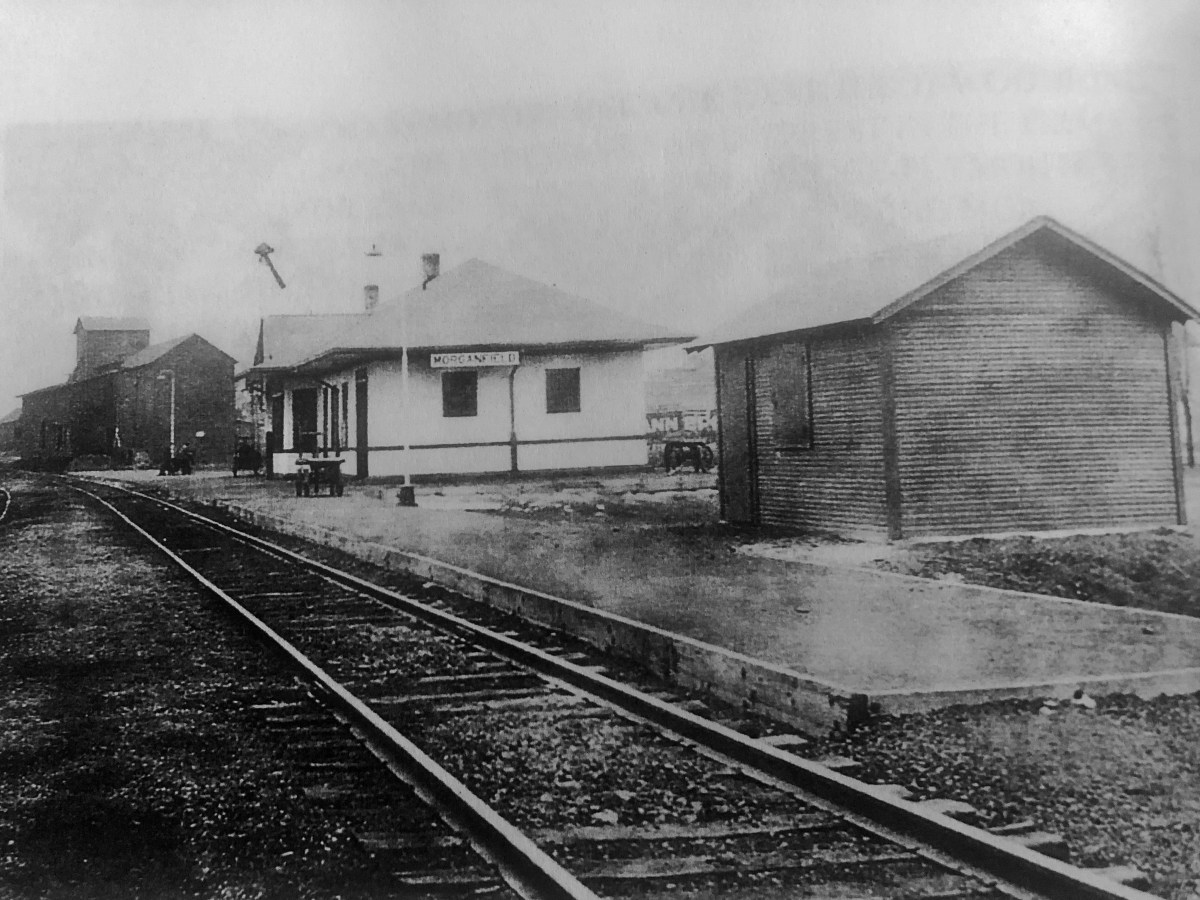
There’s an old train station across the street. Deserted and gray like the crumbling concrete steps. You stand on the rust-covered tracks and look east down where they cut open the pigs, their blood sopped by sawdust. To the west is colored town and then nothing else.
You think of Little Rock. And Jacksonville. And Rocky Mount.
The trains don’t run
where dreams bleed and gutted,
the long walk back home
Editor’s Note: This piece of Haibun poetry was prompted by a recent Pen to Paper Live session hosted by the Charlotte Lit organization. Charlotte Lit hosts the free sessions weekly. You can register here.
The session was led by Kathie Collins, who said Haibun is a Japanese form popularized by the renowned poet Bashō in the 17th century. “Think of it as a mini-lyric travel essay finished off with an insightful postscript in the form of a haiku.”
Like what you see? Please share this via the following methods:
Looking ahead as to what awaits after 57 years can be both terrifying and thrilling. I have absolutely no idea how this story is going to end.
Today, Jan. 23, 2024, I turned 57 years old.
And, if I give it great thought, perhaps my mindset is not much different than that 5-year-old boy who sat at a kitchen table in rural western Kentucky and blew out five wax candles on a cake dripping in chocolate.
I have absolutely no idea of what the future holds for me and that is both as scary and thrilling as a black spider that falls upon my bare arm and starts to inch its way upward.
There’s been plenty of living in those 50-plus years between. I’ve experienced great joy and profound sadness. My heart’s been broken and it’s also found a love like none other. There have been moments when I thought I was at the very top of the heap and a few days when this man didn’t think he could sink much lower.
It’s called living and I’ve done it.
I think of the 2008 movie “The Curious Case of Benjamin Button” in which the main character is born an old man and proceeds to age backwards. The film is based on the short story of the same name written by F. Scott Fitzgerald and published May 1922 in Collier’s Magazine. Fitzgerald’s story challenges the idea that life would be better if we could erase its hurts.
In one scene from the movie, a tugboat captain, Mike, says, “You can be mad as a dog at the way things went, you can swear and curse the fates, but when it comes to the end, you have to let go.”
That sentiment took me a good while to fully understand and be willing to embrace, but I’ve done it and believe it’s made me a better person and improved my relations with others.
Another theme from the story is one of new beginnings.
“It’s never too late, or in my case, too early, to be whatever you want to be,” Benjamin says. “I hope you live a life you’re proud of. If not, I hope you have the strength to start all over again.”
This matter, I am knee-deep in. There are things I am proud of and a few misdeeds I’d just as soon forget.
For most of my life, I worked as a journalist. But that’s no more and now I write for others and myself. I continue to work on two novels and various short stories, but there’s no certainty as to whether the work will be completed and if others will want to read those words.
It’s a great unknown. It’s something that will keep you up at night and also kick you out of bed when a new day dawns.
Even so, I still like chocolate cake and there’s still the air within my lungs to blow out the candles and hopefully extinguish the past and light the future.
And I’m all right with that.
WRITER’S NOTE: These words were the result of a writing prompt hosted by the Charlotte Lit organization on Jan. 23, 2024. Instructor Megan Rich challenged the participants to think of birthdays and consider the two shifts — time and seasons — and how they have affected one’s birthday through the years. The one-hour Pen to Paper sessions are free and held online via Zoom most Tuesday mornings at 9:30 a.m. EST. To sign up for the session go here.
Like what you see? Please share this via the following methods:
Everybody talkin’. Preacher man preachin’.
Let’s talk ekphrasis, a written response to a work of art, and my take on Romare Bearden’s “Carolina Shout.”
Words by Michael Banks in response to artist Romare Bearden’s collage titled “Carolina Shout.”
Everybody talkin’. Preacher man preachin’.

Everybody's hands out. Ain’t nobody givin'.

Falling in the water. Red moon a risin’.

Bringing back a dead man. Ain’t that their mission?
Gotta get right. Gotta get salvation.

Ain’t nobody know my sticky situation.

Feet in the mud. Brotherhood of Nation.

Everybody hands up. Meet my creation.
Tuesday mornings, I try to set aside an hour to jumpstart that creative part of my brain. I find it getting harder and harder to do so as the years creep by. But one thing I’ve discovered that helps immensely is Pen to Paper Live.
These weekly one-hour sessions conducted by the founders and staff of the Charlotte Lit organization are held over Zoom. Often more than 20 creators gather and write after receiving a “prompt” by the instructor. Some of my published works have gotten their start at Pen to Paper and I’m always inspired and comforted by the talented writers who gather there weekly.
The words I’ve written above come from the Tuesday, Oct. 4, 2022, session led by Kathie Collins, one of the founders of Charlotte Lit. The prompt was ekphrasis, which Kathie described as “a written response to a work of art.” I’ve tried a bit of ekphrastic writing before, mainly with Van Gogh’s “Wheatfield of Crows,” and it surprises me the words that come to me from another’s work of art.
On Tuesday, as an example, Kathie pointed to writer Sharan Strange’s poem titled “Train Whistle” that’s taken from artist Romare Bearden’s collage “Mecklenburg County, Daybreak Express.”
Born in Charlotte, NC, in 1911, Romare Bearden, by the time of his death in 1988, had achieved a stature known by few artists during their lifetimes. He is considered America’s greatest collagist and his works are in the permanent collections of most every major American museum.
This entire month, Charlotte Lit is celebrating Bearden and his legacy. Through a series of events titled “Artists Reckoning With Home: Celebrating Romare Bearden,” the arts organization hopes these events provide opportunities to learn about Charlotte’s past and re-imagine its future.
One of the featured events will be an ekphrastic workshop titled “Writing With Bearden.” The workshop, led by Charlotte Lit co-founders Kathie Collins and Paul Reali, will be held Sunday, Oct. 16 from 2 to 3 p.m. at the Mint Museum Uptown. The event is free, but registration is required.
Like what you see? Please share this via the following methods:
The rain falls here down near where the South Fork and Catawba meet.
The branches of the tea olive outside my window hang heavy with water, lime green offshoots reach up, seeking sunlight, but instead it’s a cloud-filled sky. Tiny yellow clusters of bloom emit the sweet scent, but my window stays closed and I fear more rain.
I think of my great aunt Catherine, she gone nearly 15 years now, and how she’d tug my ear and say, “Michael B. You’re gonna do great things.”
But this morning, my mind remains muddied of the dream that lingers from the night before – me going from room to room, opening doors, only to find four blank walls and empty spaces. The only sound being that of the click of the latch and slam of the door. A constant opening and closing. Click, slam. Click, slam.
I sip the cold water from the glass and wait for the coolness to make its way down my throat and spread across my chest. I hope it brings energy. A spark to beat back my malaise. The bed, the warm covers, they beckon.
Gloom, gloom, gloom.
The Rolling Stones sing of “Wild Horses” and how “faith has been broken, tears must be cried, let’s do some living, after we die.”
I’ve done some living and never really thought of others. Things I should have said, but didn’t. Thought my silence an easy salve, not realizing the pain left behind.
It is still Tuesday morn here and the rain still falls.
Each day another red X on the calendar and another day closer to when breath will come no more.
Until then, these words will be written and songs will be sung. Her smile and laugh and love as constant as the reappearing sun.
NOTE: The above work came from a writing prompt presented during a recent Pen to Paper Live session hosted by the Charlotte Lit organization. You can register here. In the session, presenter Kathie Collins offered a writing prompt taken from a recent workshop led by poet Ada Limon.
A tiny love story from a night when the rain fell in Charlotte, NC, on a late June night in 2014.
At the Fillmore, musicians emerge from thick curtains and fingers pluck at strings and eyes turn upward and ears fill with rhythms and rhymes. Shafts of red and blue sneak from hidden banks, falling upon sweaty faces whispering of desires and regrets. I’d come for Ziggy Stardust and instead found her. She danced in a pool of emerald. A pert nose, dark eyes emerging from a mass of chocolate curls. We discovered “Modern Love” and she laughed and my heart leaped. I emerged, her number in my pocket and I sang of “Starman” and life was good again.
David Bowie’s “StarMan”
NOTE: The above work came from a writing prompt presented during a recent Pen to Paper Live session hosted by the Charlotte Lit organization. You can register here. In the session, presenter Paul Reali challenged us to write our very own tiny love story of less than 100 words. “They try to capture in a very small space something that is very important,” he said.
Like what you see? Please share this via the following methods:
Seeing Carl was not unusual. Hearing from Carl was quite unusual.
“I dreamed of you in spectacular color.”
Carl clutched his backpack to his chest with both hands. He took a step forward. Maybe he was aware of the others. Maybe not.
“I dreamed of you in this very moment.”
She raised her eyebrow. Seeing Carl was not unusual. Hearing from Carl was quite unusual.
“You were making me a biscuit. One of those hot buttered rounds where the strawberry jelly is so thick it leaks and stains the sides. Heavens.”
Jasmine put a slice of cheese and a wedge of ham between the folds of biscuit and wrapped it in yellow wax paper. She stepped to her left, in front of the pail of potatoes, and Carl followed.
“You want hash browns,” she asked.
Carl leaned forward to whisper. “Can you not see?”
Jasmine sighed. “I don’t have time, Carl. You want hash browns or not?”
Carl turned and looked at those who stood waiting. The couples with their eyes glued to their cell phones, their hands in a constant scroll. The girl who pulled the string of pink bubblegum from her mouth, wrapped it around her finger in a loop of three and stared at him.
“You are in my dreams. And, yet, you are here before me, now in this presence, serving me a feast upon which I shall savor and accept with the greatest of gratitude.”
Jasmine walked to the register and her fingers punched the numbers. Her feet hurt. She’d been making biscuits since 5 a.m. and her baby needed more formula.
“Three twenty five, Carl.”
He stood before as he does nearly every morning. He wears the same long coat with the holes in the sleeve. His pants are still dirty and his shoes covered in dirt. His hair is thin on top, greasy and unwashed. He smiles and she sees his teeth stained yellow, one missing, completing the homeless ensemble.
“I see you every night,” Carl says, reaching his hand inside his pocket, where he digs and digs and digs.
“Hey buddy,” says the man with the cell phone. “Can you pick it up?”
Jasmine smells him and she wonders if he joins the others under the overpass by the interstate. She sees them when she drives to pick up her daughter from her mother. Carl is here every morning and he’ll shyly slide a quarter across the counter and ask for a cup of coffee. Never before has he asked for a biscuit.
He pulls his hand from his trousers and his palm is empty. He raises his eyes and she notices they are brown, as brown as her baby girl’s.
Jasmine pushes the biscuit across the counter to his waiting hands. And he smiles.
“You do see. My dream angel.”
NOTE:The above work of fiction came from a writing prompt presented during arecent Pen to Paper Live session hosted by the Charlotte Lit organization. You can register here. In the session, presenter Kathie Collins challenged us to think of synchronicity. As writers, we are always excavating something or using our writing to explore something inside us.
Like what you see? Please share this via the following methods:
It was the summer of 1978 and I discovered RC Cola and baseball. My daddy? Well, he found Billy Beer.
In the summer of 1978, I discovered RC Cola and baseball.
I guess the soda that was a cheap knock-off of Coca-Cola had always been around, as was baseball, but that summer I consumed as much of both as humanly possible.
The reason? The collector cans that featured the RC logo and its slogan “Me and My RC” on one side and a photo of a Major League Baseball player on the other with his signature, stats and other pertinent information, such as was he right-handed or left-handed.
The collecting became an obsession and the stack of royal blue 12-ounce cans soon filled a wall of my bedroom. While I was always hopeful of an All-Star, such as Pete Rose or Reggie Jackson, it was multiple cans of little-known light-hitters like Freddie Patek and Bobby Grich that made up my shrine.
These ballplayers were the ones I heard Jack Buck talk about at night and on Sunday afternoons, his voice stretching from the St. Louis Arch out across the corn fields of Southern Illinois and the cliffs of the Shawnee National Forest, across the Ohio River and into our little pocket of western Kentucky.
We lived “out in the country” as they said back then and my momma said it was too far to drive into town for Little League baseball. So, one day, I took a can of black spray paint and drew out a square strike zone on the side of our new brick home. I picked up a rubber ball and stood 12 feet away and threw as hard as I could, over and over, aiming for perfection. My daddy came home, saw what I did, spanked me good and gave me a can of turpentine and told me to scrub. And I did, until my fingers ached, but that black box remained, now part of our home.
And, inside those brick walls, the monument of tin cans grew larger and larger as I drank more and more RC. And, as you can surmise, an 11-year-old boy hopped up on caffeinated soda is going be clumsy and careless and the temple would often come clanging down, oftentimes at night when I’d stumble making my way to the bathroom.
Maybe collecting the cans was a gene thing, like a widow’s peak hairline, passed down from generation to generation.
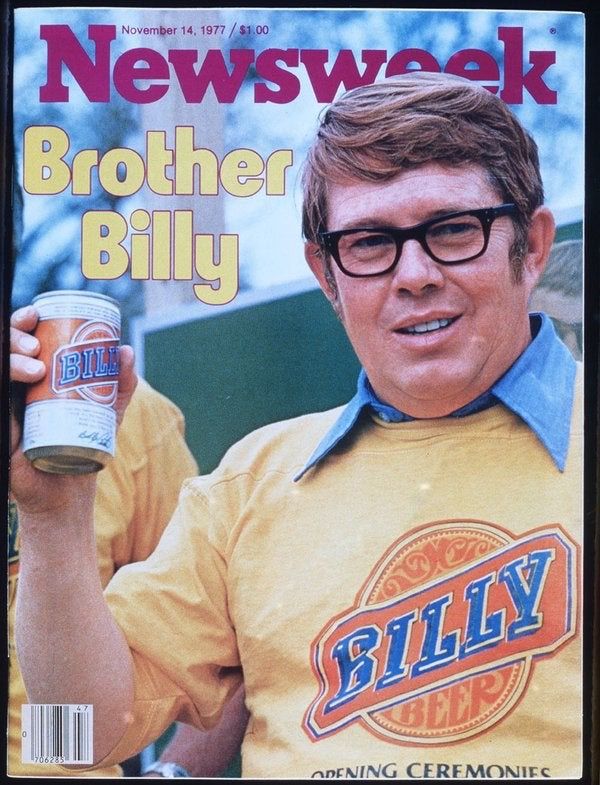
My dad cherished a can of unopened Billy Beer, a beverage known more for being endorsed by the beer-guzzling brother of then President Carter than for its taste. And he proudly displayed that single can of Billy Beer on our living room mantle next to the family Bible handed down by the teetotaling Robinsons on my mother’s side. I’m sure he saw fortune in his future and a day when that can of Billy Beer would be worth thousands of dollars.
But maybe it was more than that.
Billy Carter, the brother to former President Jimmy Carter, is shown with a can of Billy Beer that he endorsed and promoted in the late 1970s.
Eventually, my RC cans were dispatched to a grey, weathered barn that was starting to lean more than it was upright with a good part of its rusty tin roof curled back like the shavings from an apple’s peel.
That summer I remained true, continuing to drink RC and adding to the collection, the cans climbing the slats around a feed crib that contained more rats than healthy ears of corn. But the rains came, as they do, and the bottom of the cans began to rust. And I picked up football in the fall and then basketball in the winter and spring. There would be girls and then a driver’s license and the cans would topple and fall when the winter winds blew between the ever-widening planks of oak.
Eventually, the rust spread, covering the faces on the cans, and I could no longer see if I was looking at Freddie Patek or Pete Rose. One fall day, the cans were thrown into black plastic bags and tossed in the back corner of the corn crib, that darkest part down where the rats made their nest.
But the can of Billy Beer remained. For a while.
More than 40 years later, the homeplace remains, as does my mom. She’s like the maples she planted in that western Kentucky dirt. Still strong and rooted in place. The old barn has long been torn down, replaced by a shiny red, two-story building built by the Amish from down Crittenden way that is more guest living quarters than it is a work shed.
The RC Cola cans are also long gone, dispatched not soon after my father left when most of his blue jeans and those country western shirts with the pearl snap-on buttons were taken from the closet and dumped in the backyard, doused with lighter fluid and a match was struck.
I don’t know if I ever asked my mother if she took the cans to a recycling center or just simply put them in the burn barrel, their sides blackening, indistinct. Just another can in a smoldering mess of household garbage. Forgotten.
Come to think of it, I don’t know if we’ve ever really discussed the divorce much.
The separation stung at first, but eventually as you get older and perhaps wiser and maybe forgiving, you learn to accept the betrayal and loneliness. Like the collector cans, the pronouncement of “till death do us part and forever and ever” was something that was just taking up space and needed to be thrown out. The connection gone.
Still, there are days, like today, when an overheard bit of conversation or a question about obsession takes me back to those cans of my childhood. It’s those memories that remain. Good and bad.
It’s your mom going to the IGA, picking up a six-pack of RC Cola and there being two more Freddie Pateks in the bunch. You disappointed, but not saying anything as you pull the tab and drink the bland soda, hopeful for another day.
It’s spray painting a black square on the side of a brick wall. And bits of that square block still clinging to that sturdy brick, 40 years later.
It’s clinging to the past and hoping that what you hold will only become more precious as time goes on. But, more importantly, it’s realizing when it’s time to just take it out to the burn barrel, light a match and move on.
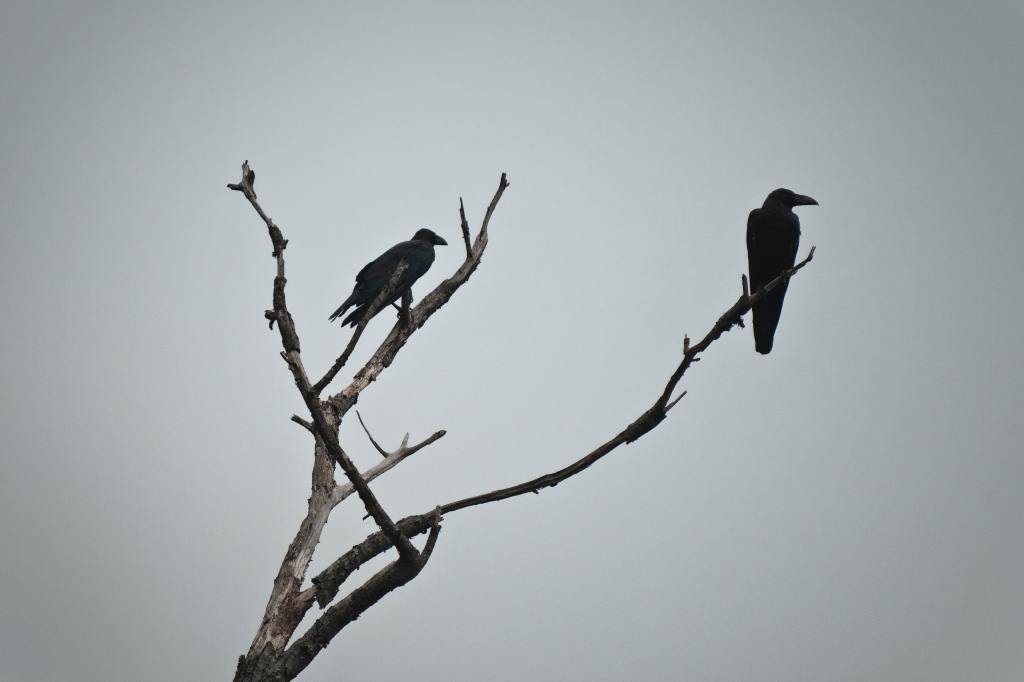
I hear the incessant “caw, caw, caw” and I want to place my hands over my ears and hum the words to a happy song. But nothing comes to my lips.
The crow is black. The crow is foreboding.
Is the crow death?
In the river bottoms, the crows come in packs, swooping low over the harvested fields, the broken stalks of corn like the limbs of war dead, half-in, half-out of the grey, boot-sucking muck.
A murder of crows is what they call that pack of black that fills the fading light of late afternoon.
“Fitting,” I mutter to myself, raising the collar of my worn pea coat to my neck, a shield against the harsh December wind that comes from the north.
I, too, am in my final season and I believe the crow knows.
I skirt the field and climb the hill and they fill the branches of the barren oak that rises up and over the farmhouse. The roof has started to sag from the weight of rain and all these years. I know that I’ll not repair it.
Inside, where my wife once stood at the stove, stirring the pot of soup, and the brown-headed girl, she being 10 then, came to me with open arms and words of “daddy, daddy, daddy,” it is now quiet. On the wooden table, there is an opened bag of bread, a slice of white lies to the side left to grow stale. Mold just a few days away.
My breath catches and I feel a tightening in my chest. I retreat back to the cold wind that whips around the porch and I stumble down the three wooden steps. I stuff my hands in my pockets and hunch my shoulders.
I don’t look up. There’s no need. I know the crow is near.
NOTE:The above work of fiction came from a writing prompt presented during a recent Pen to Paper Live session hosted by the Charlotte Lit organization. You can register here. In the session, presenter Kathie Collins challenged us to respond to the Van Gogh painting “Wheatfield With Crows” and write what moved us.An interesting note is that the painting is believed to be the last work of the celebrated painter.
Like what you see? Please share this via the following methods:
They’ve met for a year in the vacant parking lot. He’s always brought Beanee Weenees. She’s so tired of Beanee Weenees.
Editor’s Note:The following is an example of flash fiction stemming from a writing prompt during the most recent Pen to Paper Live session hosted by the Charlotte Lit organization. You can register here. We were given an example of flash fiction and encouraged to write from what inspires us.
The car door creaked and groaned as a 15-year-old Buick tends to do when he opened and closed the door. From the yellow plastic bag, he pulled forth a dented cup of Beanee Weanies. He smiled as if he was handing her a handful of sapphires.
Sure, she likes the taste of hot dog chunks and gravy and beans. Her mistake was in telling him. Since that first time they agreed to meet in the back corner of the vacant Food Lion parking lot, it’s always been Beanee Weenees. For 30 minutes, they’ll sit in the Buick and hold hands. She’ll slurp and listen as he talks of tomorrow.
She’s so tired of Beanee Weenees.
Today is exactly one year after their first lunch date. The box holding the ring holding the quarter carat feels heavy in his pocket. When, he wonders. He decides definitely after she’s had her Beanee Weenees.
Like what you see? Please share this via the following methods:







 Michael Banks 360